How to Choose a Natural Loofah Supplier: 8 Things to Check Before You Order
If you sell on Amazon or Shopify, run an eco store, or buy for wholesale distribution, adding a natural loofah SKU looks simple — until the first shipment arrives with fiber that feels wrong, a musty smell, or packaging that doesn't match your shelf.
Most wholesale loofah suppliers will happily send you a price list. Far fewer can explain why their product won't end up in your 1–3 star reviews. This checklist covers the 8 things worth verifying before you place any order — based on the questions we answer most often as a natural loofah supplier in Vietnam, and the problems buyers tell us they've run into elsewhere.
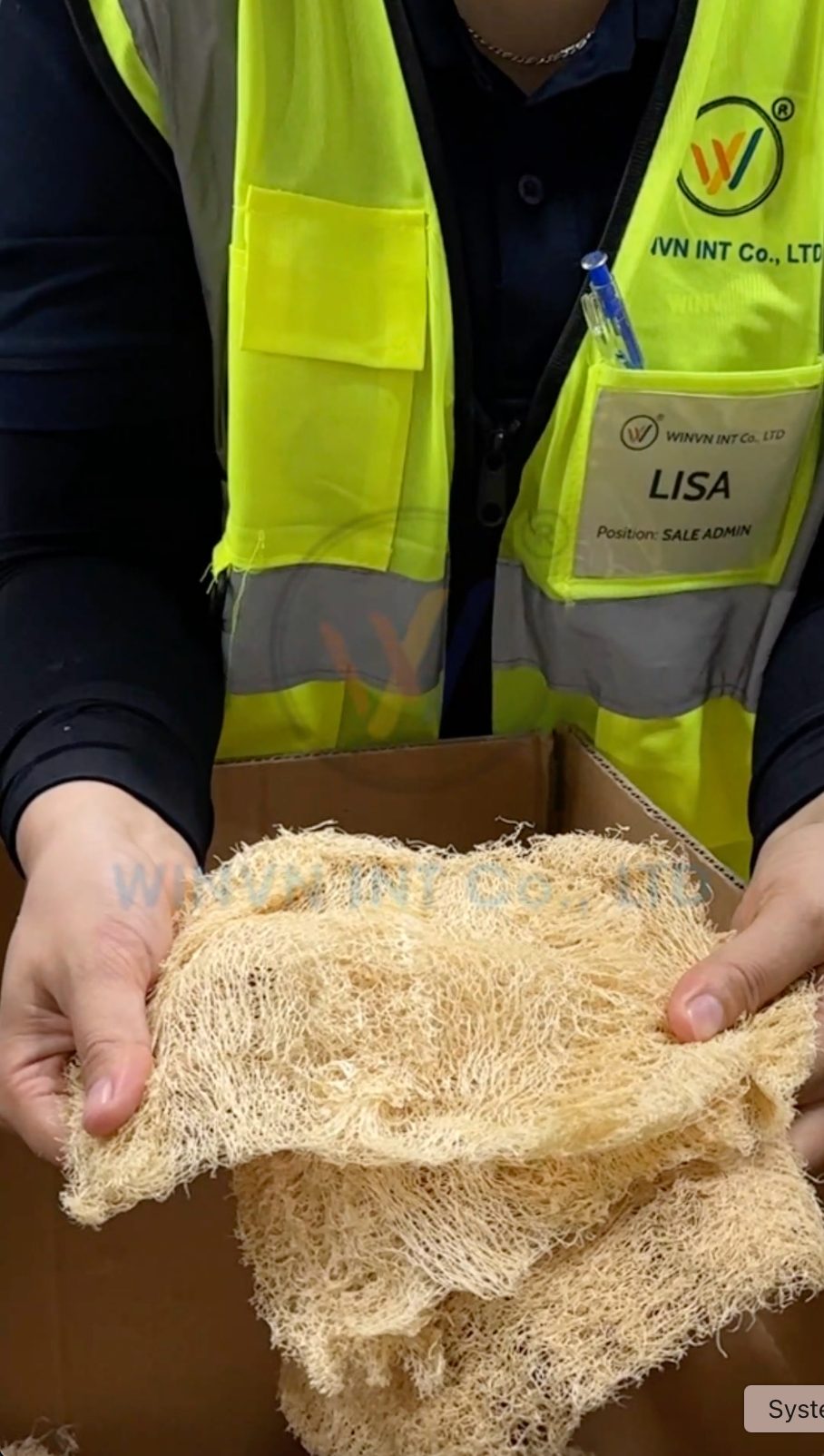
Raw fiber inspection — where product quality is actually decided.
1. Fiber maturity: was the loofah harvested at 6+ months?
This is the single biggest quality factor, and the one least often mentioned in quotations. Loofah harvested young has soft, loose fiber that collapses quickly in use. Fully matured loofah (6 months or more on the vine) develops the dense, springy fiber structure that holds up to daily use in the bath or kitchen.
How to check: ask the supplier directly at what age their loofah is harvested, and request close-up photos or a physical sample. Mature fiber looks tighter and springs back when compressed; young fiber looks sparse and stays flat.
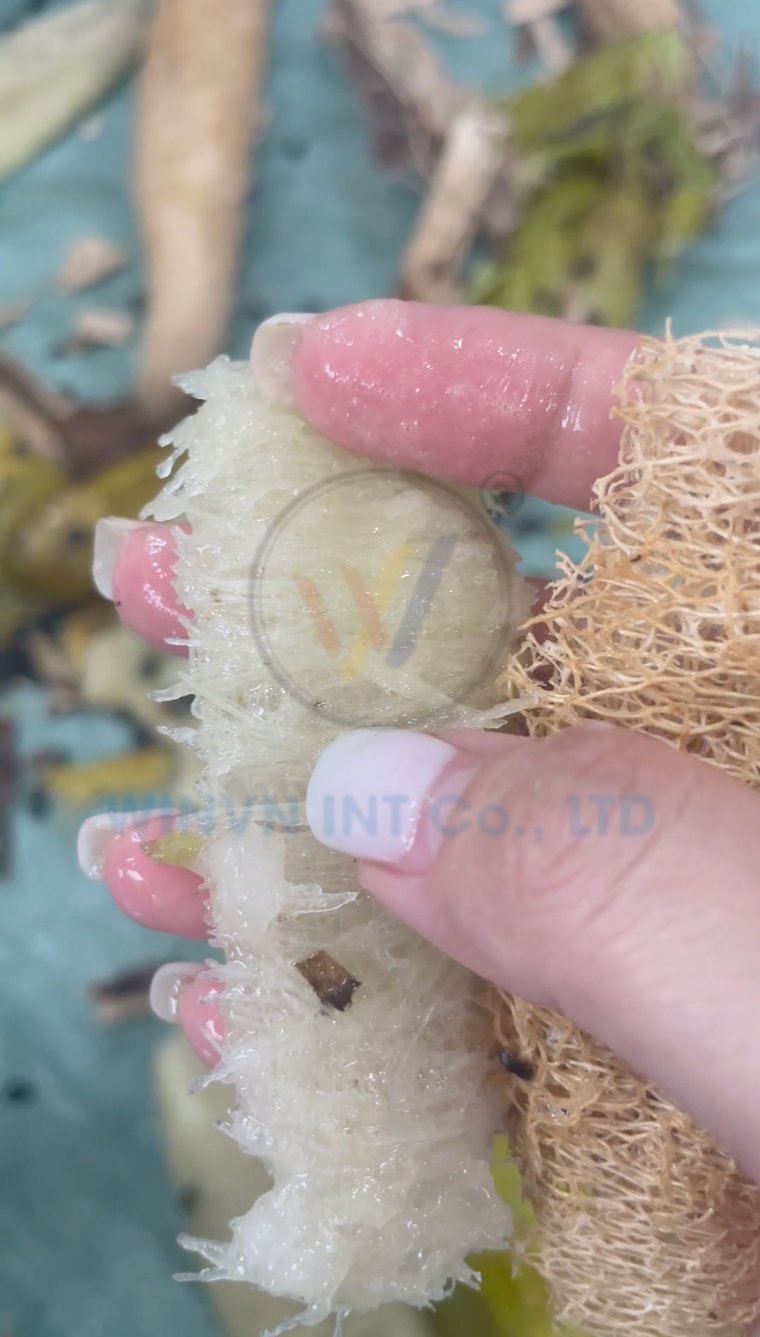
Young fiber (left) vs matured fiber — the difference your customers will feel.
2. Moisture control: what's the moisture level at packing?
Mold and musty smell — the two most common complaints in loofah product reviews — almost always trace back to moisture. Natural loofah packed with too much residual moisture can develop mold inside sealed packaging, sometimes weeks after it has already shipped.
How to check: ask what moisture level the supplier targets before packing and how they measure it. As a reference point, we control moisture to below 12% before export. A supplier who can't answer this question specifically is a risk signal.
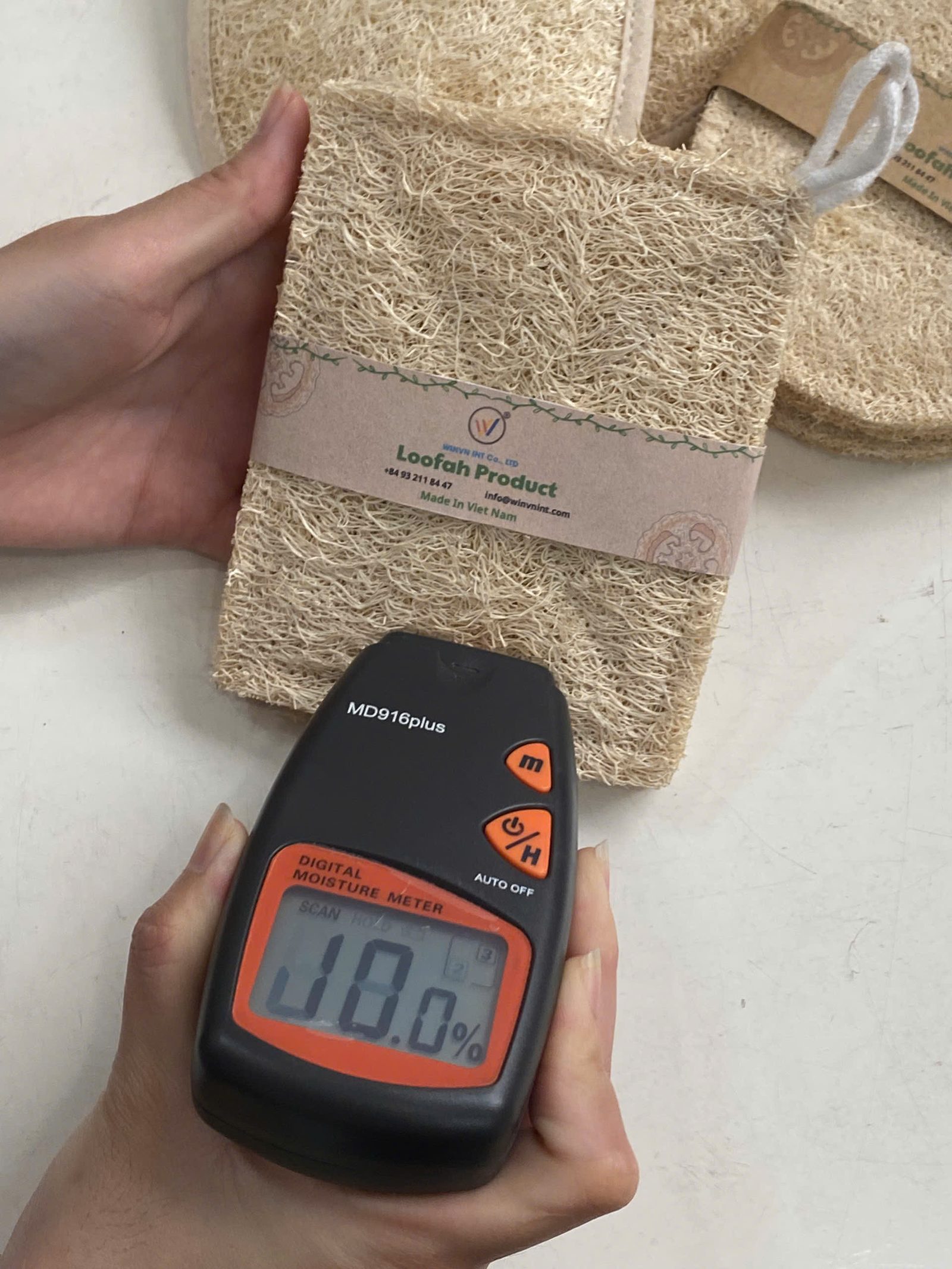
Moisture checked before packing — this batch reads 10%, below our 12% limit.
3. Processing method: is the natural color preserved?
Some processors bleach loofah to achieve a uniform pale color. It looks "cleaner" in photos, but unnecessary chemical treatment weakens fiber and sits poorly with the eco-conscious customers most loofah brands are targeting.
How to check: ask whether the fiber is bleached or chemically treated. Natural, unbleached loofah has a warm cream-to-tan tone with slight natural variation — which is exactly what you should explain on your packaging, not hide.
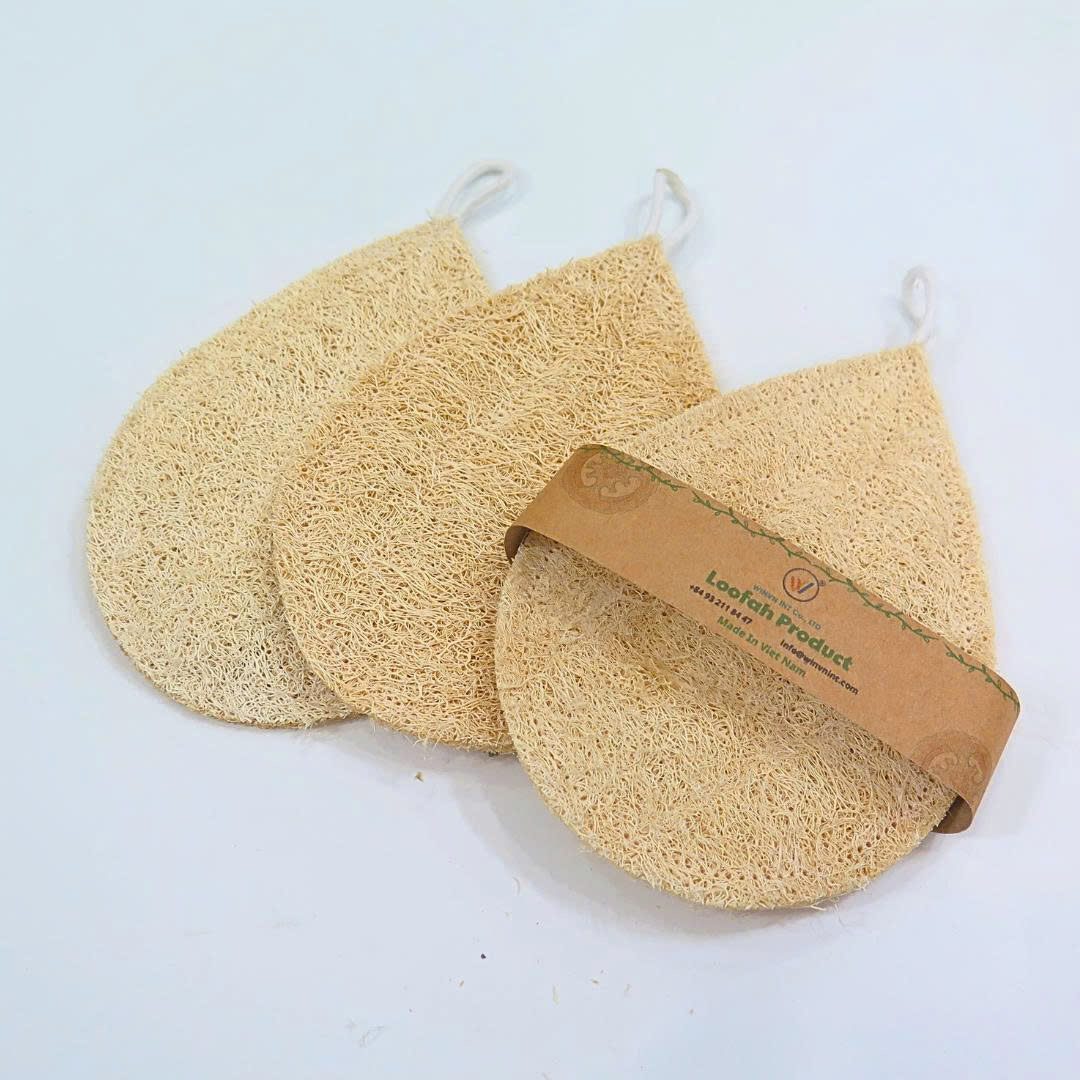
4. Fiber sorting: is the fiber matched to the use case?
A common mistake is treating loofah as one generic material. Bath products need softer, more open fiber; kitchen sponges need denser, firmer fiber that scrubs well. Suppliers who ship one texture for every product are shipping future bad reviews.
How to check: ask how fiber is sorted and graded, and whether bath and kitchen SKUs use different fiber grades. If you're comparing samples, feel the difference between the supplier's bath and kitchen products — there should be one.
5. QC process: what gets checked before export?
Natural products vary by nature — which is exactly why batch QC matters more, not less. Stitching strength, shape consistency, dryness, smell and packaging fit should all be checked before a container is loaded.
How to check: ask the supplier to describe their QC steps for a real order. Specific answers ("we check stitching, shape, moisture and packaging on every batch") beat vague ones ("we have strict quality control").
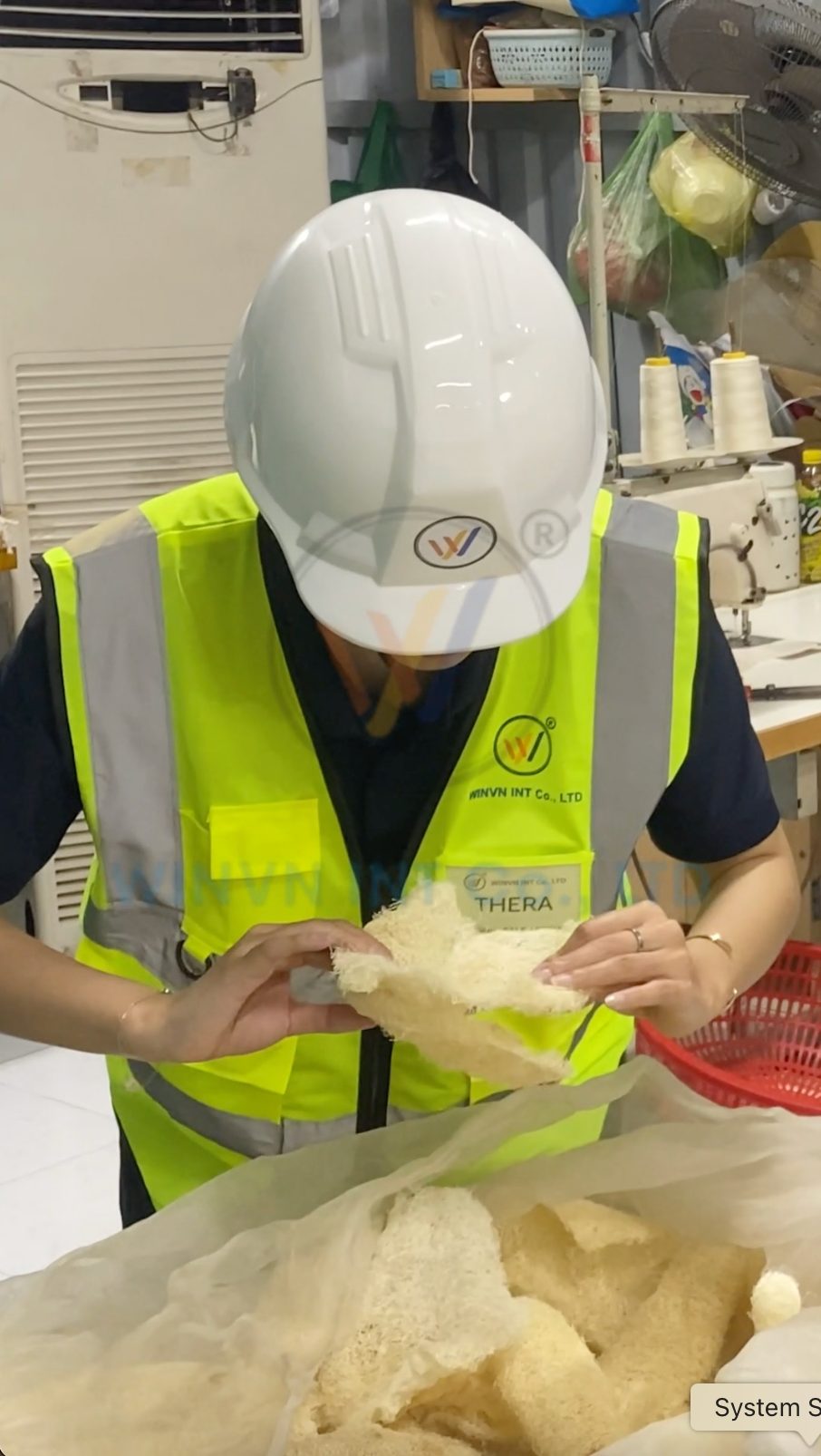
Stitching is a frequent failure point — it belongs in the QC checklist.
6. Packaging capability: can they get you retail- or FBA-ready?
For most buyers, packaging is where a commodity product becomes a sellable SKU. What you need depends on your channel:
- Eco stores and retail: kraft belly bands, paper-based packs, shelf-ready presentation, plastic-free options
- Amazon FBA: FNSKU label space, barcode placement, carton labeling to warehouse specs, poly bag or paper alternatives
- Private label: your logo and design on the packaging, with a stock-design option if you want to test before branding
How to check: ask for photos of packaging from real past orders — not just design mockups — and confirm what's feasible at your quantity.
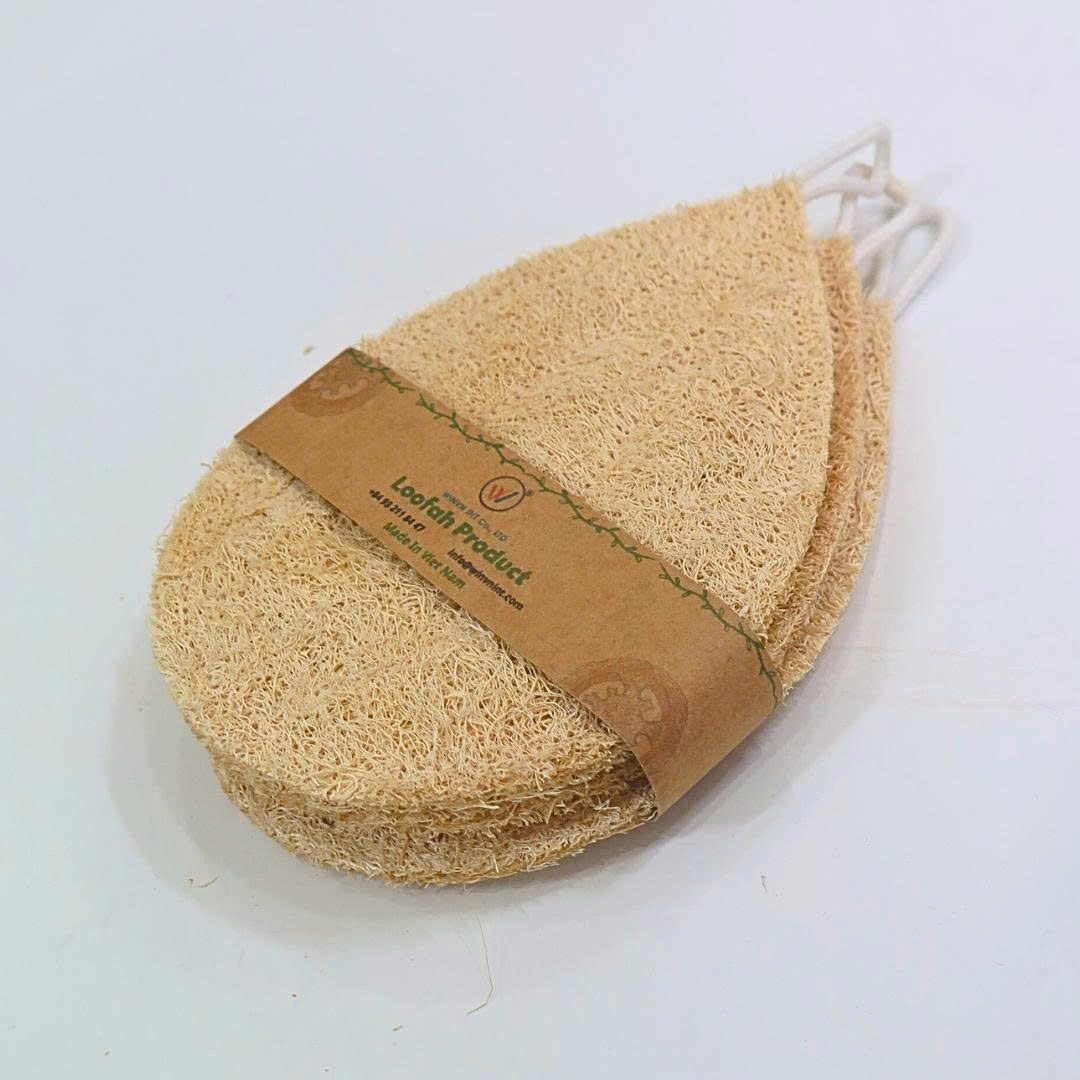
Kraft retail-ready packaging — plastic-free and shelf-ready.
7. Export experience: can they document and deliver?
A great product that gets stuck in customs is not a great purchase. Buying loofah wholesale from overseas means your supplier needs to handle export documentation, work with forwarders, and ideally offer door-to-door or FBA-direct delivery.
How to check: ask which markets they currently export to, what shipping terms they offer (EXW, FOB, DDP), and whether they can deliver to your warehouse, prep center or Amazon directly.
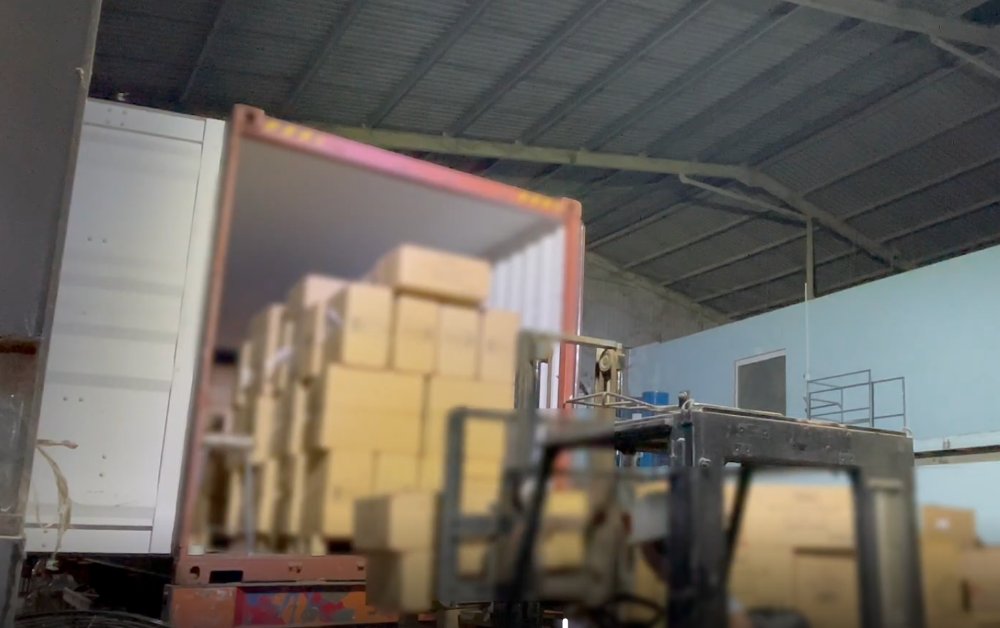
Container loading for export — ask where a supplier currently ships.
8. Sample policy: can you test before you commit?
Photos don't transmit texture, smell or stitching quality. Any serious evaluation of wholesale loofah suppliers should include physical samples in your hands before a trial order.
How to check: ask about the sample policy upfront. A fair, common arrangement: free samples for serious evaluation with the buyer covering shipping, sometimes credited back on the first order. Then look for a low-MOQ trial path (100–500 pcs) so you can test the market before scaling.
The pattern behind all 8 checks
Notice what these checks have in common: none of them is "who has the lowest price." Price differences between loofah suppliers are usually small; the cost of returns, bad reviews and unsellable inventory is not. The suppliers worth working with are the ones who can answer specific questions with specific answers — about maturity, moisture, sorting, QC and packaging — because those answers are what end up in your product reviews.
Want this as a checklist? We've condensed these 8 checks into a free one-page Loofah Sourcing Checklist you can use with any supplier — including us.
Download the free Sourcing Checklist →FAQ
What is a good MOQ for a first wholesale loofah order?
For a first test order, look for suppliers that accept 100–500 pcs. This lets you validate demand and check real product quality before committing capital to a bulk order.
How can I check loofah quality before placing a bulk order?
Request physical samples and check fiber density, texture consistency, smell, dryness and stitching. A reliable supplier will explain their moisture control and QC process, not just send photos.
Why do some loofah products develop mold or bad smell?
Mold and odor usually come from immature fiber, insufficient drying, or moisture above roughly 12% at packing. Ask your supplier how they measure and control moisture before export.
Should I choose a supplier based on the lowest price?
Unit price matters, but returns, bad reviews and unsellable inventory cost far more. Compare suppliers on fiber quality, QC, packaging capability and support — then compare price among those that pass.
Planning a loofah SKU for your store or brand? Get your wholesale price — SKU path, packaging direction, sample process and QC checklist matched to your channel, within 24–48h.
Get wholesale price →