Why Loofah Products Get 1–3 Star Reviews (And How to Prevent Them)
"Moldy after two weeks." "Smells strange out of the bag." "Way too rough for my skin." If you're selling loofah on Amazon or through your own store, you've probably seen at least one review like this — and it's tempting to treat it as a one-off, a shipping fluke, or a customer who didn't use the product right.
Most of the time, it isn't. The pattern behind 1–3 star loofah reviews is fairly consistent, and almost all of it traces back to decisions made before the product ever left the supplier — fiber age, drying, moisture at packaging, and how the SKU was matched to its use case. None of these are hard to check for. Here are the five most common causes, what to look for, and how to prevent each one at the sourcing stage.
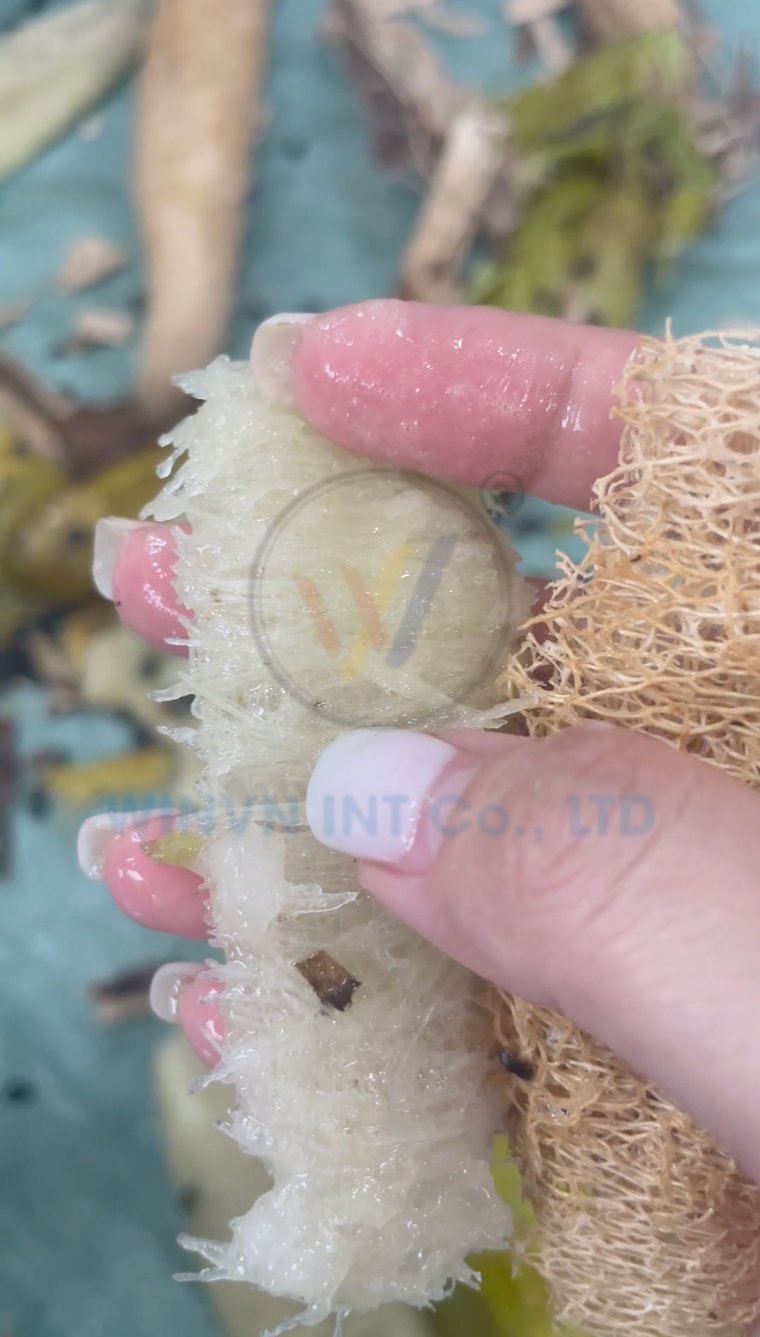
Young fiber (left) vs. matured 6+ month fiber (right) — the texture difference is visible before a customer even touches it.
1. Fiber harvested too young — wrong texture for the use case
Loofah needs to mature on the vine for at least 6 months to develop the fiber structure that holds up as a bath or kitchen scrubber. Fiber harvested earlier looks similar in photos but behaves differently in hand — it can feel unexpectedly soft and flatten quickly, or come across as inconsistently rough depending on the batch, neither of which matches what a listing photo promised.
How to spot it: ask your supplier directly what harvest age they work with, and request a physical sample rather than relying on product photos alone.
How to prevent it: specify matured fiber (6+ months) in your PO or spec sheet, and ask how batch consistency is checked before shipment.
2. Poor drying design — the root cause behind most mold complaints
Drying is what brings moisture down to a safe level before the fiber is packed. If the drying setup doesn't allow even airflow — fiber stacked too densely, or dried indoors without enough ventilation — the outside can look and feel dry while moisture is still trapped inside. That's usually what's behind a review that says the product molded two or three weeks after arrival: the mold didn't start on the shelf, it started at packaging.
How to spot it: ask how the fiber is dried — open-air racks with spacing between pieces are a good sign; ask to see photos if you can't visit in person.
How to prevent it: request confirmation that moisture is checked and recorded before the fiber goes into packaging, not just before it leaves the warehouse.
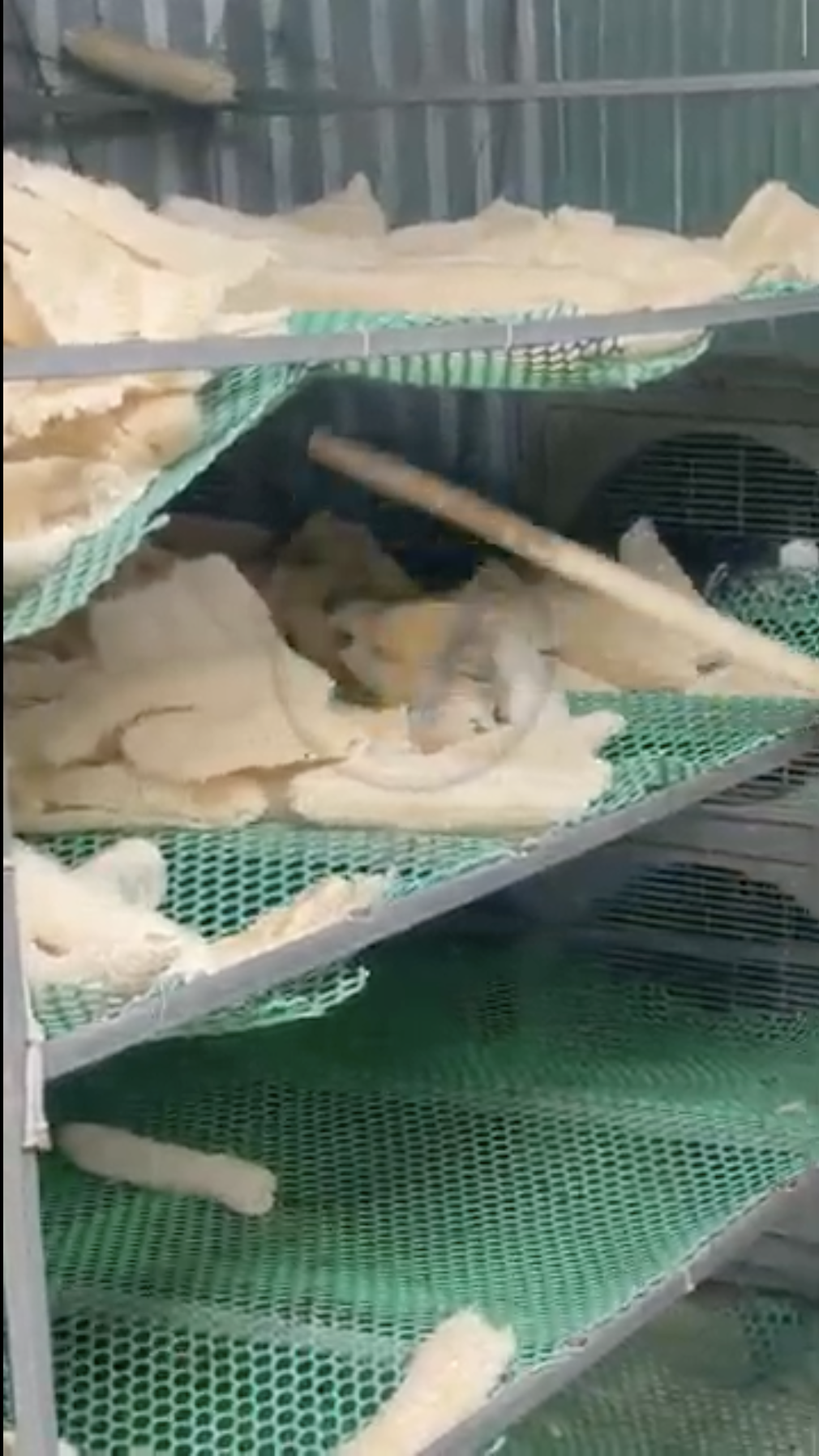
Open-air drying with spacing between pieces — the step most mold complaints trace back to.
3. High moisture at packaging — the smell that shows up later
Even with good drying, timing matters. If fiber is sealed into poly bags or cartons before it's actually reached a safe moisture level (under 12%), that remaining moisture has nowhere to go during a multi-week sea shipment — and a musty or "off" smell is often the first thing a customer notices, sometimes before any visible mold.
How to spot it: this one is hard to catch from a sample alone, since a small batch dries faster than a full container. Ask instead for the process — does the supplier check and record moisture % right before packaging, or only earlier in production?
How to prevent it: make a moisture check at packaging (not just after drying) a standard part of your QC requirement, and ask for the reading on your purchase order.
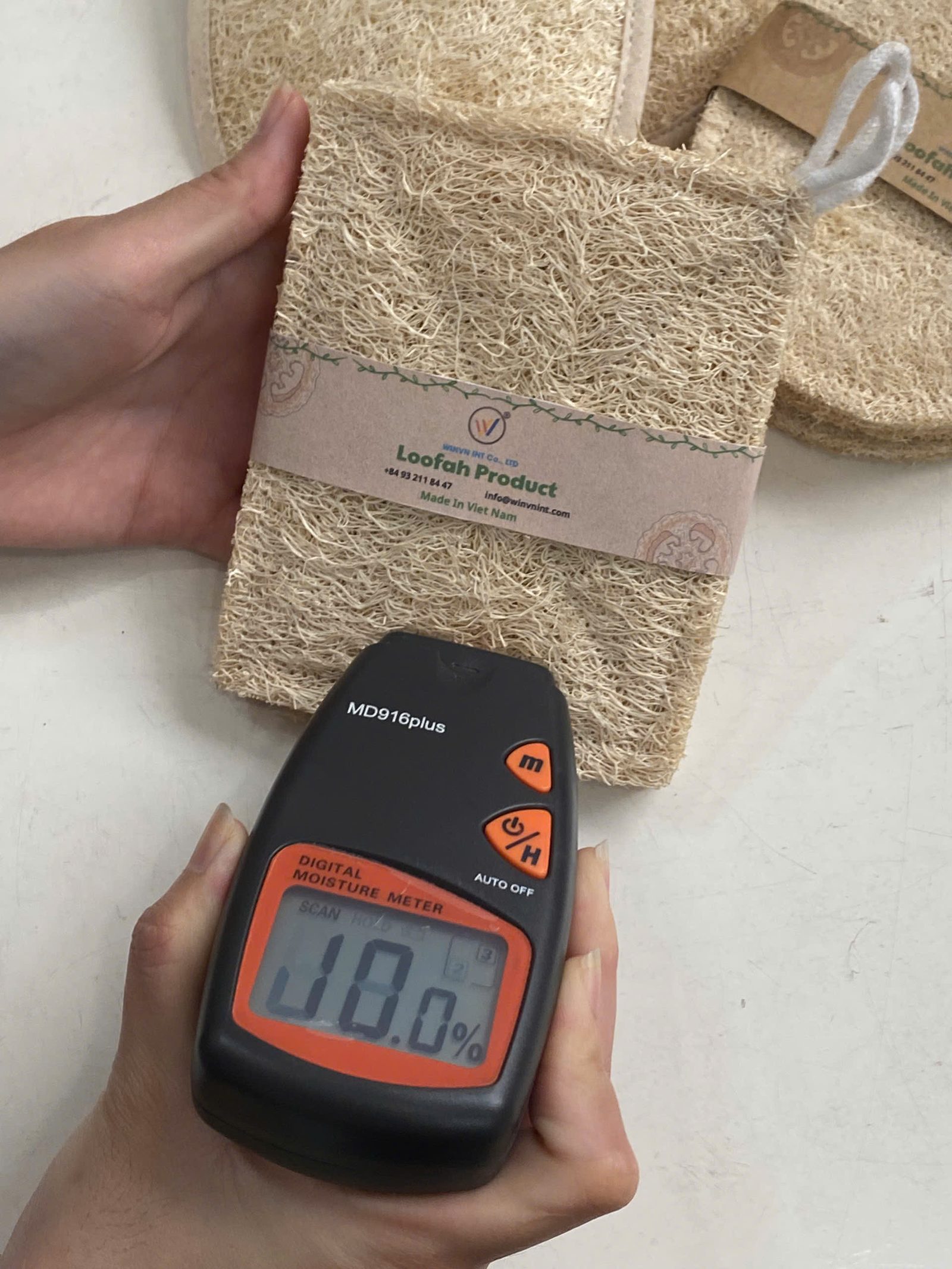
A moisture check before packaging — the target is under 12% before fiber goes into any sealed bag.
4. "Multi-purpose" fiber that doesn't match the listing
Some suppliers simplify their catalog by offering one fiber grade labeled "multi-purpose" for bath, kitchen, exfoliating and pet use all at once. In practice, bath fiber needs to be softer than a kitchen scrubber, and using the same SKU across different listings is a common reason for split reviews — "too rough for my face" next to "too soft to scrub a pan," on the same product.
How to spot it: ask whether fiber is graded by use case or sold as one general-purpose grade.
How to prevent it: choose a SKU matched to the specific use case on your listing rather than one SKU stretched across several.
5. Packaging that doesn't explain natural color variation
Loofah that hasn't been bleached keeps its natural beige-to-tan color, and some variation between batches is normal — it's actually a sign nothing was chemically treated. Without any explanation on the packaging or listing, though, that variation can read as inconsistent quality to a customer who expected every unit to look identical, and it shows up in reviews as "not as clean-looking as pictured."
How to spot it: check whether your current packaging or listing copy says anything about natural color variation.
How to prevent it: add one short line — "natural color varies batch to batch, no bleach used" — turning a potential complaint into a plastic-free, no-bleach proof point.
FAQ
What causes mold on loofah sponges?
Mold almost always traces back to moisture that was still too high when the fiber was packaged — either it wasn't dried long enough or it was sealed before reaching a safe level, under 12%. Asking your supplier for a moisture check record before shipment is the most direct way to catch this before it reaches customers.
Why does my loofah smell bad a few weeks after it arrives?
A smell that develops after the product has shipped is usually the same root cause as mold, just an earlier stage of it — residual moisture trapped inside the fiber during packaging, released slowly during transit.
Is color variation in natural loofah a quality problem?
No. Natural loofah that hasn't been bleached will show some batch-to-batch color variation. It's a sign the fiber wasn't treated with unnecessary chemicals — worth explaining on packaging or your listing so customers don't mistake it for a defect.
Can I fix these issues without switching suppliers?
Sometimes. Asking your current supplier for moisture check records and harvest-age confirmation on your next order is a reasonable first step. If they can't provide either, that's useful information on its own.
Already selling loofah and seeing reviews like these? Send us your current product and packaging photos — we'll give you a straightforward read on which of the five risk points above might be behind it, no pitch attached.
Request a free product review →