Private Label Loofah: How to Launch Your Own Brand from 100 pcs
"Private label" tends to sound like a bigger commitment than it needs to be — a finished logo, a big bulk order, a long lead time before anything ships. For a first natural loofah SKU, none of that has to be true on day one.
You can start with a stock, unbranded pack to confirm the product actually sells, then move to your own packaging once you know it does. This guide walks through that path: choosing the right SKU, deciding what packaging to start with, requesting a sample, placing a small trial order, and scaling once demand is confirmed.
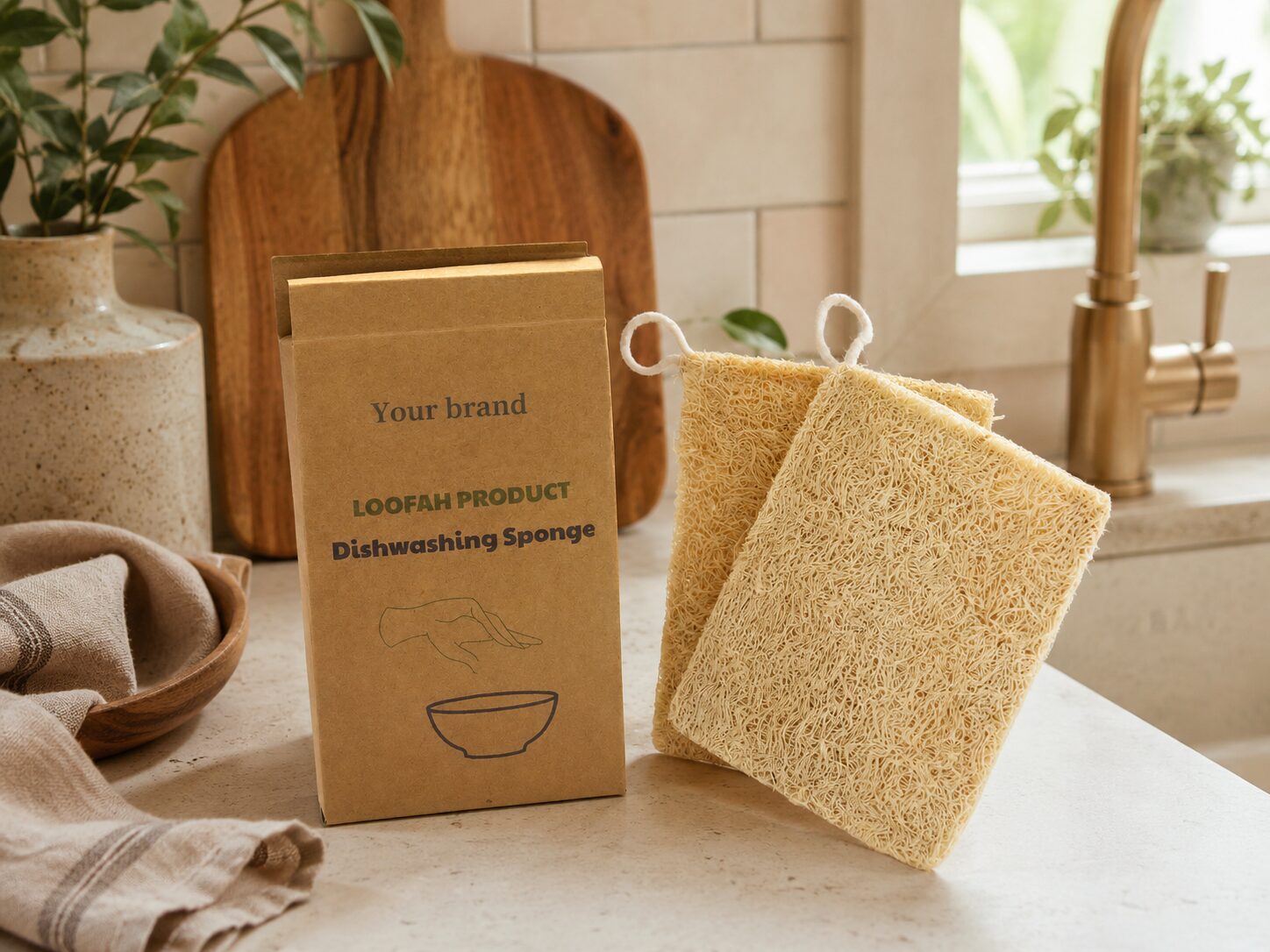
A private-label mockup — your logo goes where "Your brand" sits here.
You don't need a finished brand to start
This is the part most sellers get wrong before they even request a quote: they assume private label means committing to packaging design, a registered trademark and a large order, all at once. It doesn't have to work that way.
Stock packaging — a plain kraft belly band or a poly bag — lets you place a real order and test real sell-through before any of that exists. Once you know the SKU moves, private-label packaging with your logo and design is the next step, not the first one.
Step 1 — Match the SKU to your channel
The most common private-label mistake isn't packaging — it's picking the wrong SKU for how the product will actually be used. A kitchen sponge and a bath exfoliating pad need different fiber density, and choosing one texture for every use case is a fast way to end up with mismatched reviews.
- Amazon or ecommerce sellers: a single bath or kitchen SKU with clear FBA-ready packaging, so you can launch one listing well rather than several half-tested ones
- Eco-shops and refill stores: a shelf-ready bath or kitchen SKU that fits your existing plastic-free assortment without adding inventory risk
- Handmade soap and bath & body brands: a loofah scrubber paired with soap as a bundle or gift set, sold as a natural add-on rather than a standalone new category
Match the SKU to the channel first — the packaging decision is easier once that's settled.
Step 2 — Decide your packaging path
Once you know the SKU, there are two honest starting points, and neither is wrong:
- Stock packaging first: kraft belly band or plain poly bag, no logo required. Good for validating demand before you invest in design.
- Private label from the start: your logo and design on the packaging, if you already sell and just need a new SKU to match your existing brand.
If you sell on Amazon, FBA-ready packaging is available on either path — FNSKU label space, a retail-ready barcode, and carton labeling to Amazon warehouse specs. What's feasible depends on your quantity and packaging style, so it's worth confirming against your actual order before finalizing artwork.
Step 3 — Request a sample before you commit
Photos and mockups don't tell you how the fiber actually feels, how it's stitched, or whether the packaging fits the product properly. Free samples are available for serious evaluation — you cover the shipping cost, which can sometimes be offset in the first order.
Use the sample stage to check the same things worth checking with any loofah supplier: fiber maturity, moisture control, and stitching quality. A private-label box only looks as good as the product inside it.
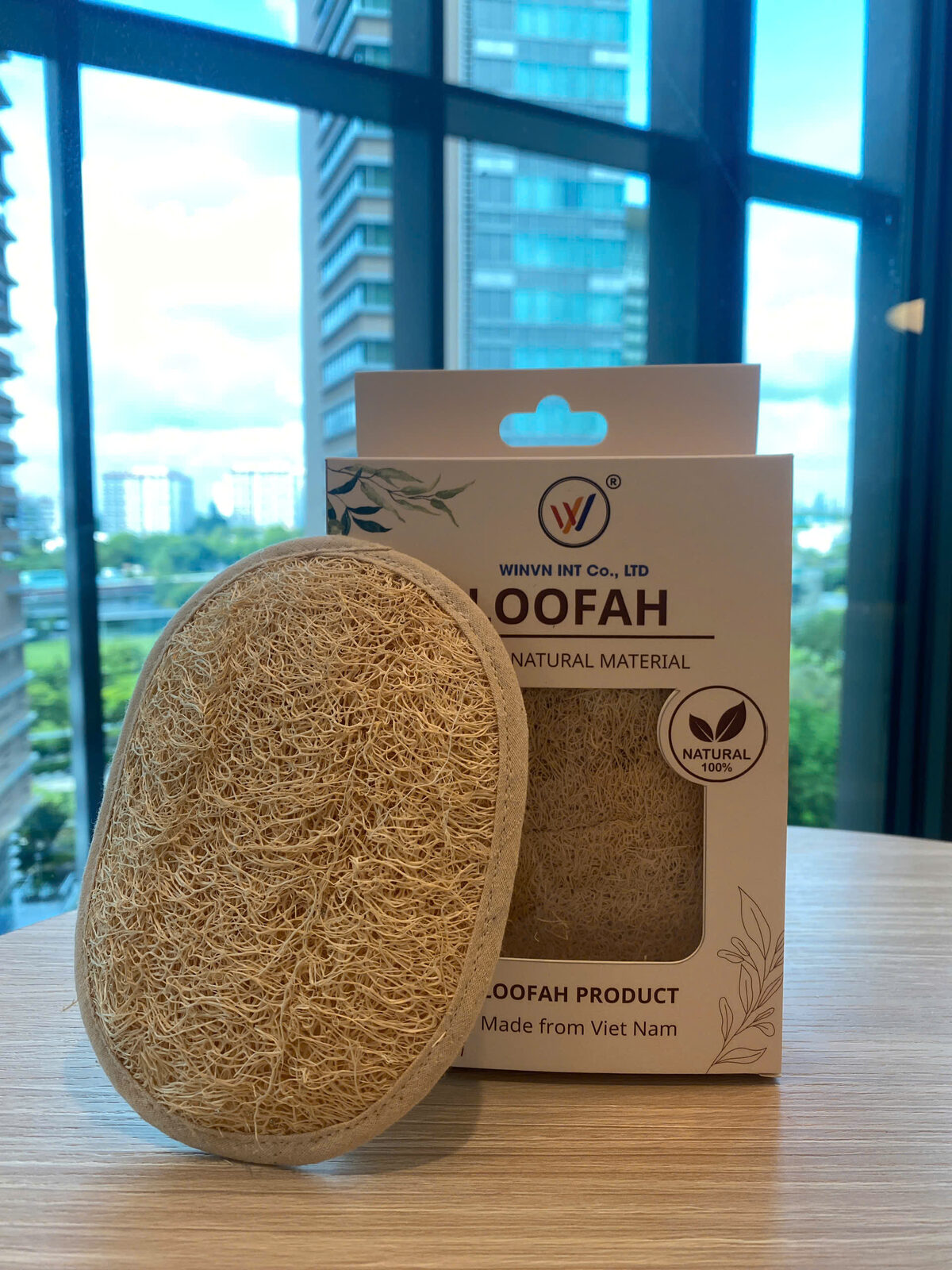
A packaging sample — check the product and the box together before scaling.
Step 4 — Place a trial order from 100 pcs
A low-MOQ trial order from 100 pcs, with customized packaging, keeps the first commitment small. That's enough to list the product, see real sell-through, and confirm quality at order volume — without tying up capital in stock you're not sure will move.
This is also the point where a "just testing" quantity makes sense if you're not ready to commit to a full private-label run yet: start with stock packaging at 100 pcs, then move to your own branding once the SKU is proven.
Step 5 — Scale once demand is confirmed
Once the trial order sells through, scaling usually means three things: moving from stock to full private-label packaging if you haven't already, adding a second SKU (a kitchen sponge alongside a bath pad, or a gift set alongside a single item), and locking in a repeat order cadence so you're not restocking under pressure.
There's no fixed timeline for this step — it depends on how quickly the first batch moves in your channel, which is exactly why starting small matters.
Common private-label mistakes to avoid
- Skipping the sample stage to save time. A packaging delay is recoverable; a bulk order of the wrong fiber texture is not.
- Choosing one generic texture for every use case. "Multi-purpose" loofah is a common source of mismatched reviews — bath and kitchen fiber should feel different.
- Finalizing artwork before confirming packaging feasibility. Barcode placement, FNSKU space and carton specs are easier to fix before printing than after.
- Going straight to a large order. A 100-pc trial costs little to test and a lot less to be wrong about than a bulk order does.
FAQ
Do I need a registered brand to order private label loofah?
No. You can start with stock packaging — a plain kraft belly band or poly bag — to test the product first, then move to private label once your brand and design are ready.
What's the minimum order for a private label loofah SKU?
A low-MOQ trial order from 100 pcs is available, with customized packaging, so you can test the market before committing to a bulk order.
Can I get FBA-ready packaging for my private label loofah?
Yes. FBA-ready packaging is available, including FNSKU label space, retail-ready barcode and carton labeling to Amazon warehouse specs.
How do I confirm quality before scaling up a private label order?
Request a physical sample first and check fiber maturity, moisture control and stitching before placing a larger order — the same checks worth applying to any wholesale loofah order.
Ready to put your logo on a natural loofah SKU? Get your wholesale price — SKU path, packaging direction and sample process matched to your channel, within 24–48h.
Get wholesale price →