How Natural Loofah Is Grown, Harvested & Made
Most people who search for natural loofah have never seen where it actually comes from. Some assume it's a sea sponge; others assume it's a synthetic look-alike shaped to seem "natural." It's neither — loofah is a plant, and the difference between a loofah sponge that lasts and one that falls apart in a few weeks is decided long before it's ever cut into a finished shape.
Here's the actual journey, stage by stage, from vine to shelf-ready product — including the steps most buyers never get shown.
1. It starts as a vine, not a sponge
Natural loofah comes from Luffa cylindrica, a fast-growing climbing vine in the same family as cucumbers and squash. The fruit looks like a large green gourd while it's growing. The sponge texture people associate with loofah only exists once that gourd is left to fully mature and dry out — inside is a dense, fibrous network that was originally the plant's vascular structure.
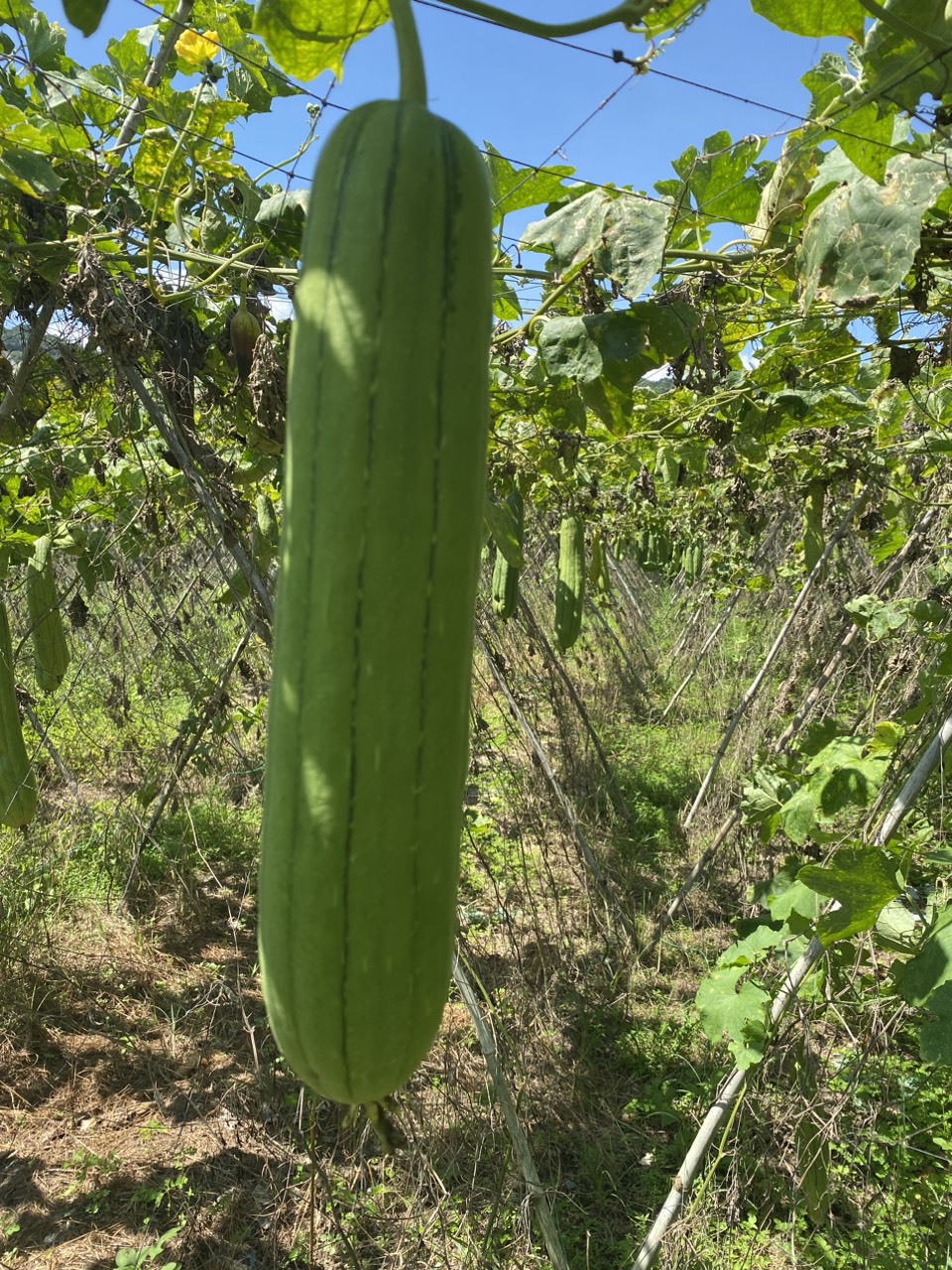
A loofah gourd still on the vine — this is what becomes the sponge once it fully matures and dries.
2. Why the plant needs 6+ months on the vine
This is the step that decides most of a loofah product's quality, and it's also the step most quotations skip over. If the gourd is picked too early, the internal fiber is still soft and loosely structured — it looks fine in a sample photo but collapses quickly with regular use. Left on the vine for at least 6 months, the fiber develops the tighter, springier structure that holds shape wash after wash.
We don't harvest on a fixed calendar date — we harvest once the fruit has reached this maturity point, which is also why maturity is the first thing we check when sourcing raw material from growers.
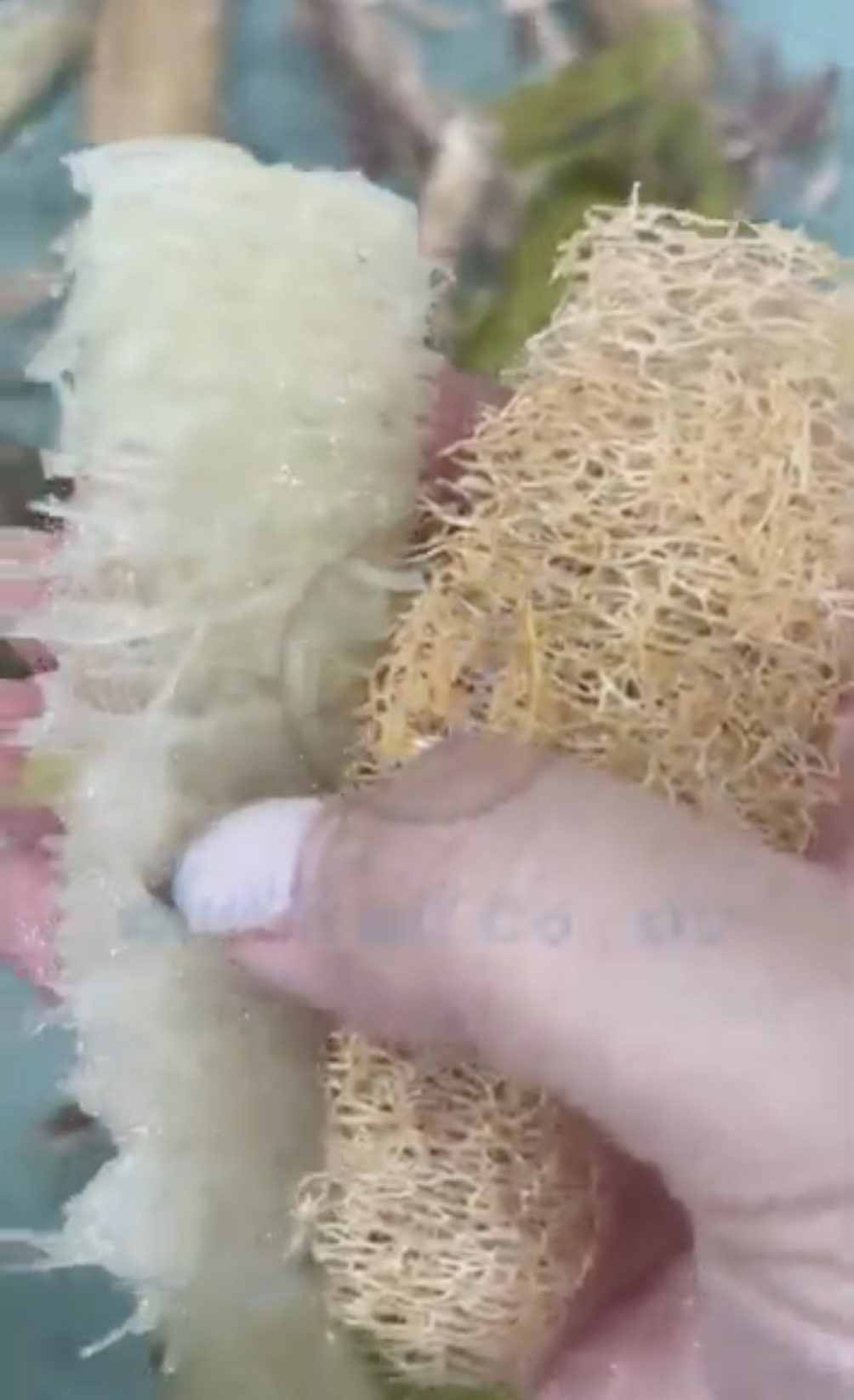
Young fiber (left) vs matured fiber (right) — the same plant, six months apart.
3. Harvest and raw material receiving
Once mature, the dried gourds are harvested and brought in as raw material, still in their whole, unprocessed form. Before anything is cut or cleaned, our team sorts through incoming batches by hand — checking maturity, size and fiber condition, and separating out anything that doesn't meet the standard before it enters processing.
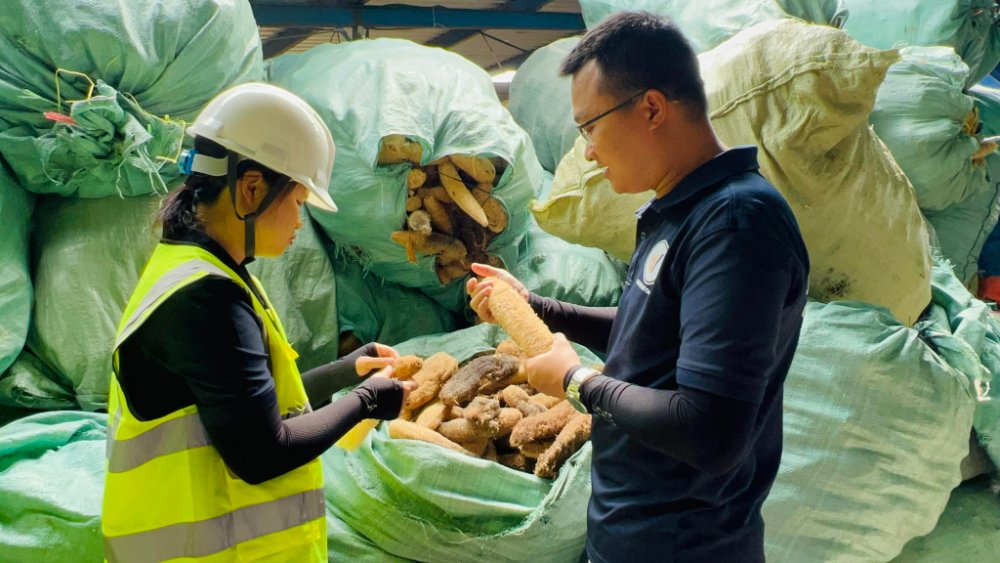
Raw loofah, freshly harvested and dried, being sorted before processing.
4. Drying on racks and moisture control
Even after natural drying in the field, fiber still carries residual moisture that needs to come down further before it can be safely packed. Batches are spread out on open-air racks so air can move through the fiber evenly, then moisture is tested directly rather than estimated. This step matters more than most buyers realize — moisture left too high is the single most common cause of mold and musty smell showing up in loofah products weeks after they've shipped. We track moisture through processing, targeting below 12% before anything is packed for export.
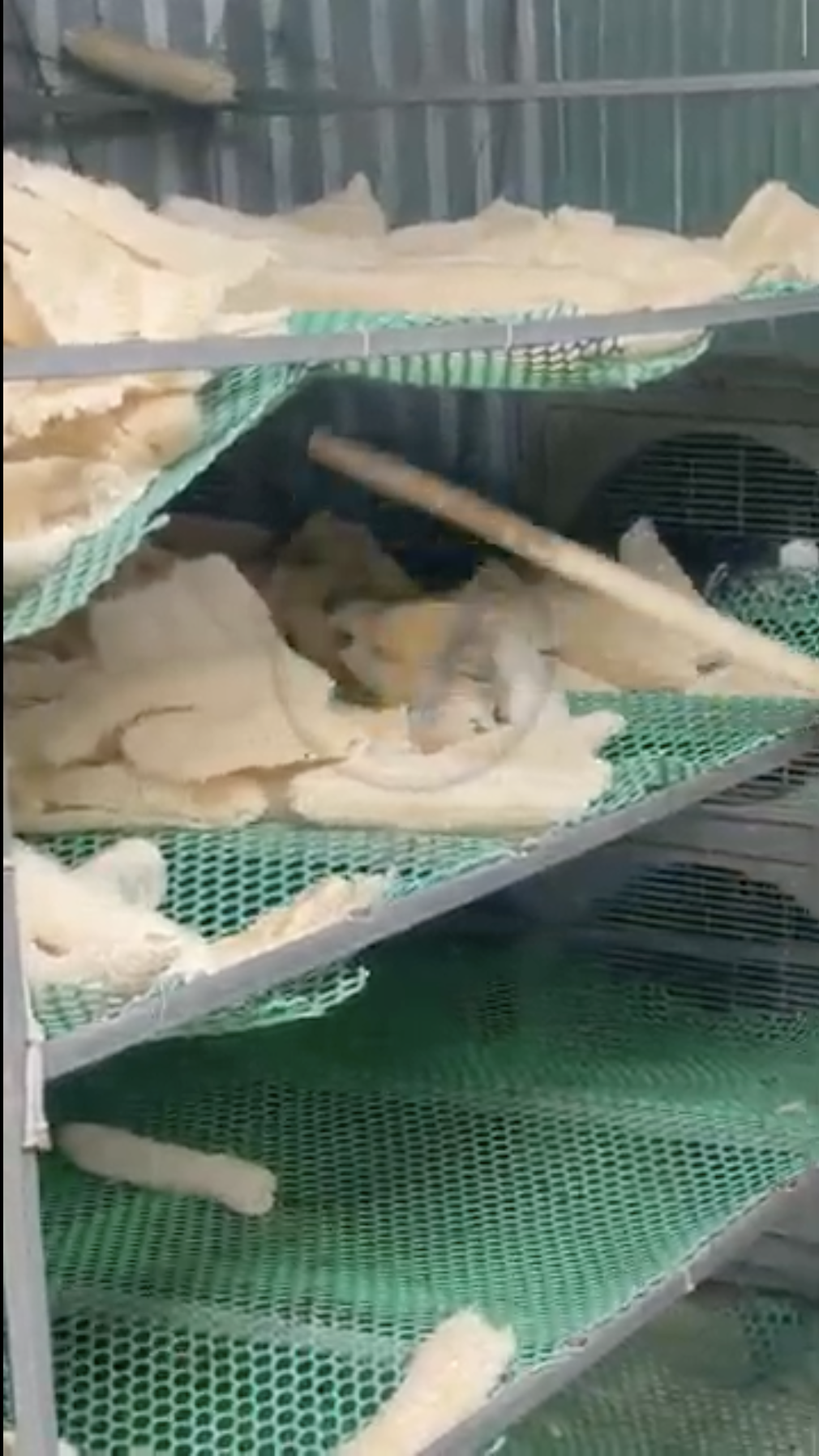
Fiber drying on open-air racks — the wooden sticks are used to turn the fiber by hand for even drying, before moisture is tested and tracked toward our below-12% target.
5. Cleaning and flattening — no bleach needed
Next, the raw fiber is cleaned and run through flattening to even out its texture and thickness before cutting. Some processors bleach fiber at this stage for a uniform pale look. We don't — fully matured, properly dried fiber already has a natural warm cream-to-tan tone, and unnecessary chemical treatment only weakens it. The slight natural variation in color is something we tell brands to lean into on packaging, not hide.
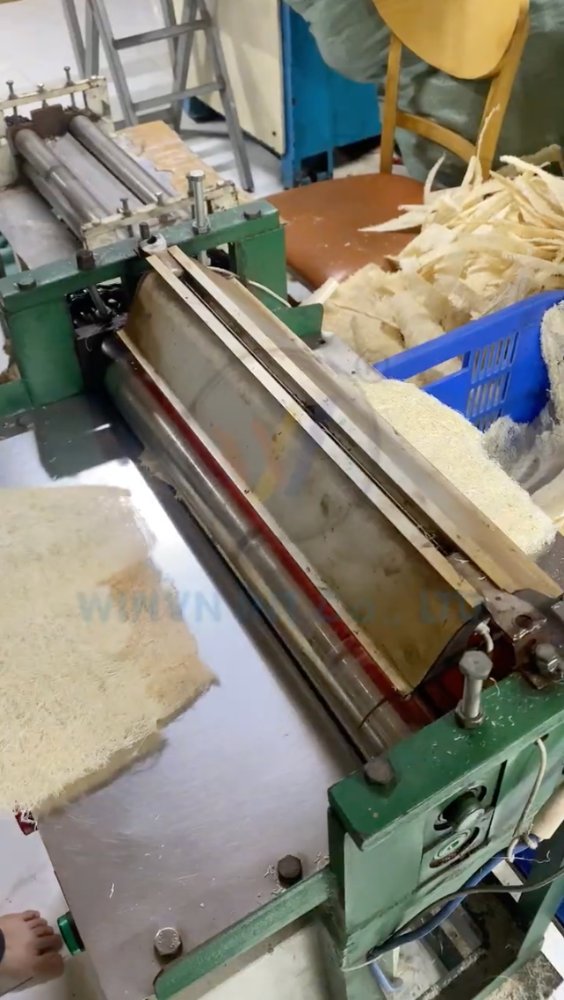
Fiber cleaned and flattened, ready for cutting.
6. Cutting and sewing into finished shapes
This is where fiber becomes an actual product — cut and sewn into the shape a specific SKU needs, whether that's an oval bath scrubber, a rectangular kitchen sponge, or a back scrubber belt. Fiber is graded by density for this step too: softer fiber for bath products, firmer fiber for kitchen sponges that need to hold up to scrubbing. Edges are trimmed by hand for a clean finish before a piece is counted as finished.
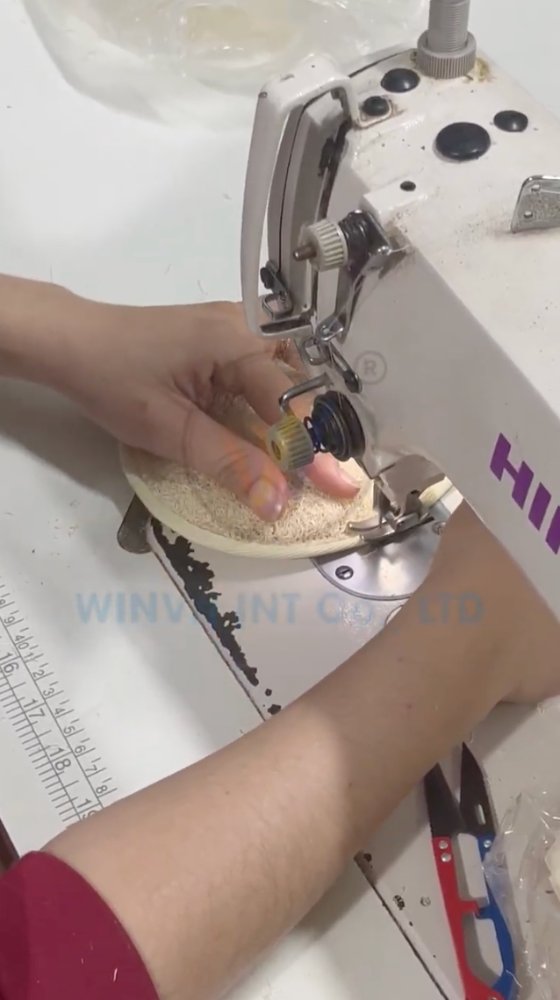
Cutting and sewing — where raw fiber becomes a finished SKU.
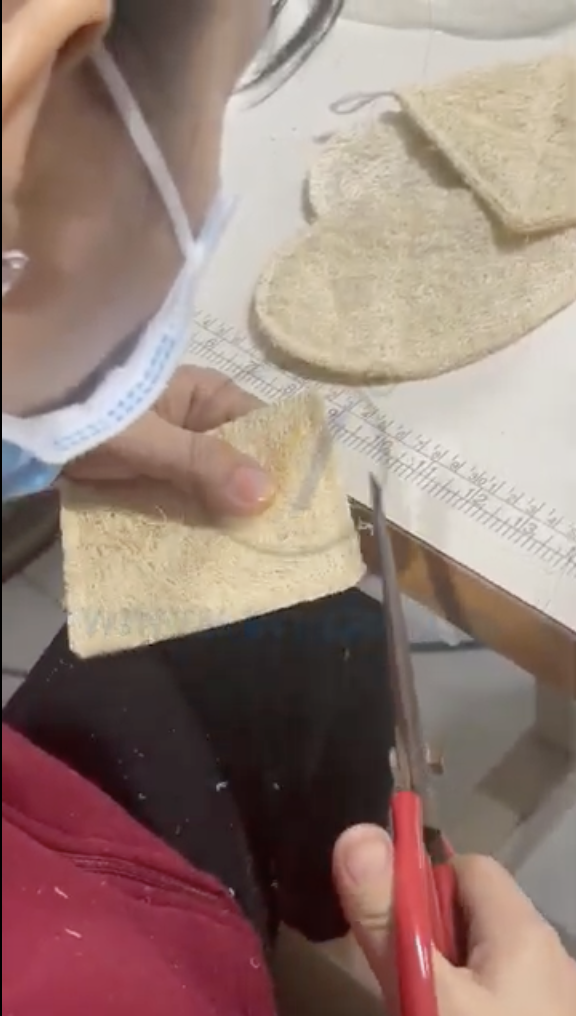
Edges trimmed by hand for a clean, consistent finish.
7. Packaging for export
The last stage is packaging — kraft belly bands, paper-based packs, or private-label boxes depending on what a buyer's channel needs, then packed into export cartons. This is also the point where a lot of the "is this actually a decent product" impression gets decided on a retail shelf or an Amazon listing photo, which is why we treat packaging as part of the product, not an afterthought.
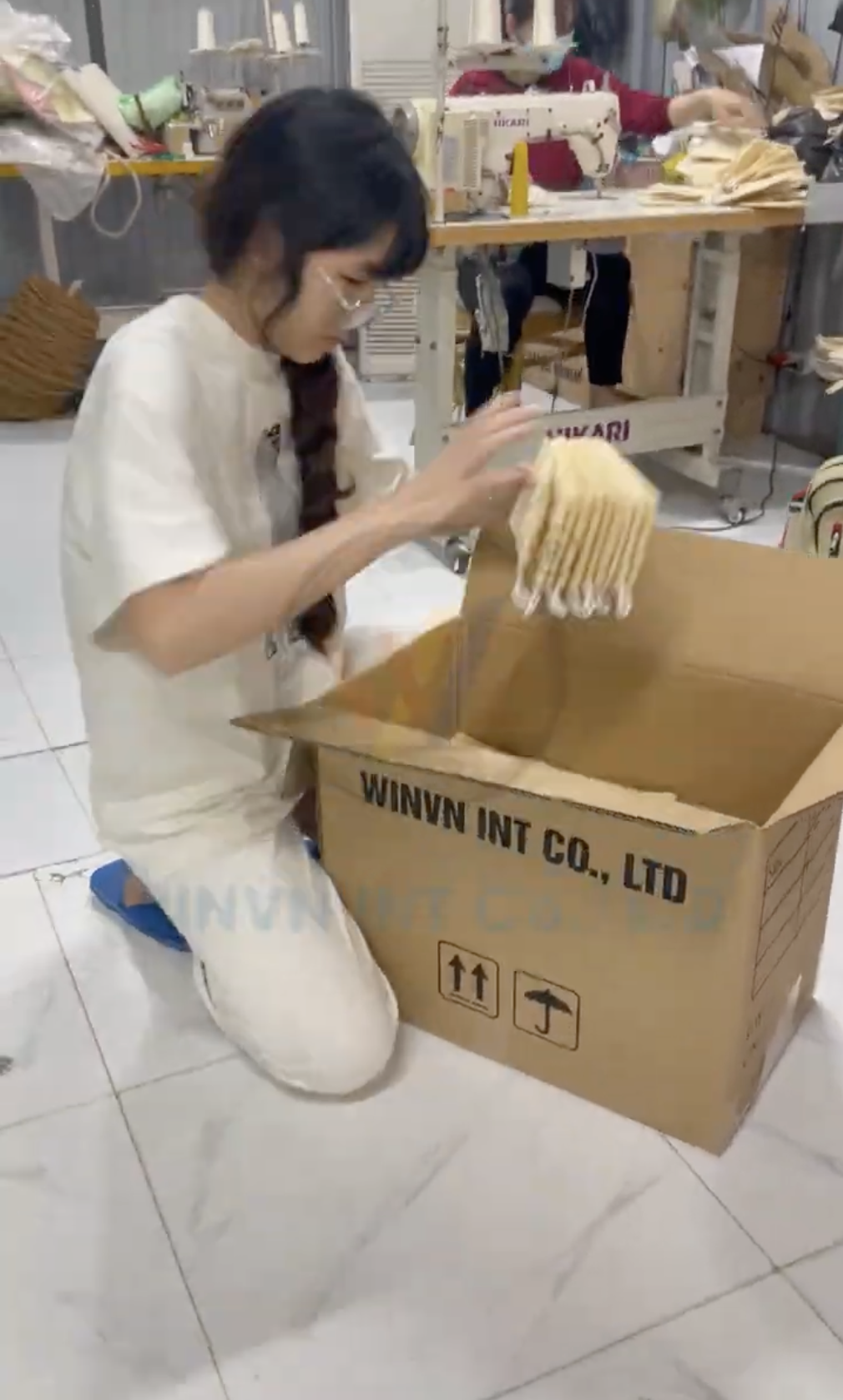
Finished products packed into export cartons, ready to ship.
Why this journey matters if you're sourcing loofah
None of these steps are secret, and none of them require special certification to do right — just consistency. But they explain why two loofah products that look identical in a listing photo can perform completely differently once a customer actually uses one. If you're evaluating a supplier, the questions worth asking aren't about price — they're about maturity, moisture and process, which is what we cover in our supplier sourcing checklist. And if you're ready to put your own name on a SKU, the same fiber ends up in private-label loofah products you can launch from 100 pcs.
Want to see the fiber quality yourself? Request a free sample and check the maturity, moisture and texture in your own hands before you commit to an order.
Request a free sample →FAQ
Is loofah a plant or a sea sponge?
Natural loofah is a plant, not a sea sponge. It grows as a fruit on a climbing vine (Luffa cylindrica), similar to a cucumber or gourd. Once the fruit fully matures and dries, its inner fibrous network is what becomes the loofah sponge.
How long does loofah need to grow before it's harvested?
For sponge-grade quality, loofah should stay on the vine at least 6 months until it dries naturally. Harvesting earlier produces soft, loose fiber that breaks down quickly in use.
Is natural loofah processed with bleach or chemicals?
It doesn't need to be. Fully matured loofah fiber has a natural warm cream-to-tan color without bleaching. Bleaching is a cosmetic step some processors use for a uniform pale look, not a quality requirement.
Why does moisture control matter during loofah processing?
Residual moisture is the main cause of mold and musty smell in loofah products. Fiber needs to be dried and monitored down to a low moisture level, generally below 12%, before it's packed for export.
Planning a loofah SKU for your store or brand? Get your wholesale price — SKU path, packaging direction, sample process and QC checklist matched to your channel, within 24–48h.
Get wholesale price →