Loofah Sourcing FAQ for Amazon Sellers: MOQ, Samples, FBA Prep & Import Documents
Sourcing a new SKU for an Amazon listing usually comes with more open questions than a product page can answer — what's the minimum order, does the packaging actually work for FBA, what happens at customs, and why won't anyone just send a price for the photo you found online.
Below are the questions we hear most often from Amazon sellers looking into natural loofah, answered directly.
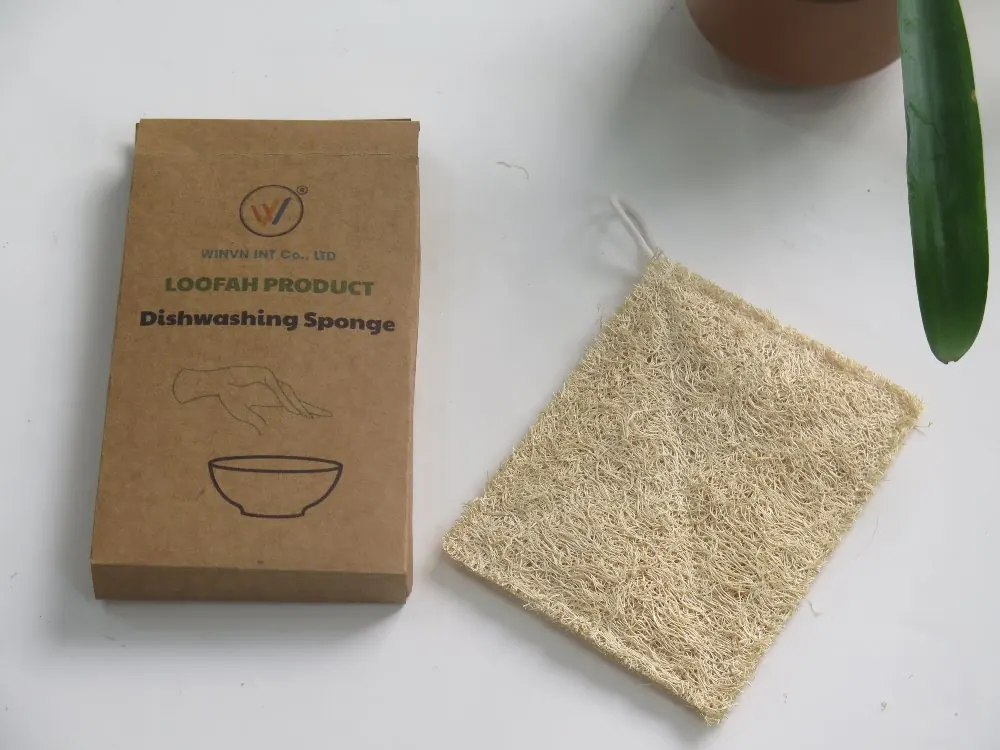
FBA-ready packaging — barcode, FNSKU space and carton labeling handled before it ships.
What's the minimum order quantity (MOQ) for loofah as an Amazon seller?
A trial order from 100 pcs is available, with customized packaging, so you can test a listing before committing to a bulk order. This is meant for validating a new SKU, not as a long-term order size — most sellers move to a larger repeat order once the first listing shows it sells.
Can I get a free sample before placing an order?
Free samples are available for serious evaluation. You cover the shipping cost, which can sometimes be offset in your first order. Use the sample to check the same things worth checking with any wholesale supplier: fiber maturity, moisture, and stitching — not just how it looks in a photo.
Do you provide FBA-ready packaging?
Yes. FNSKU label space, a retail-ready barcode and carton labeling to Amazon warehouse specs are available on both stock (unbranded) and private-label packaging. What's feasible depends on your quantity and packaging style, so it's worth confirming against your actual order before finalizing artwork.
How fast can I get a sourcing plan for my listing?
A 7-day path is used to go from your business details to a clear next step: you share your channel and product category on day 1, get SKU and packaging ideas by day 3, confirm a sample direction by day 5, and have the sample process and trial-order direction confirmed by day 7. That's the planning timeline — actual production and shipping time depends on your specific order, so it's worth asking early rather than assuming.
What export documents come with a loofah shipment?
Export paperwork such as a bill of lading and certificate of origin is provided as part of a standard shipment, and real examples (redacted for buyer privacy) can be shared on request. Import requirements can vary by product classification and destination port, so it's worth confirming with your own customs broker or freight forwarder which specific documents your shipment needs before it ships — that's not something a supplier can guarantee on your behalf.
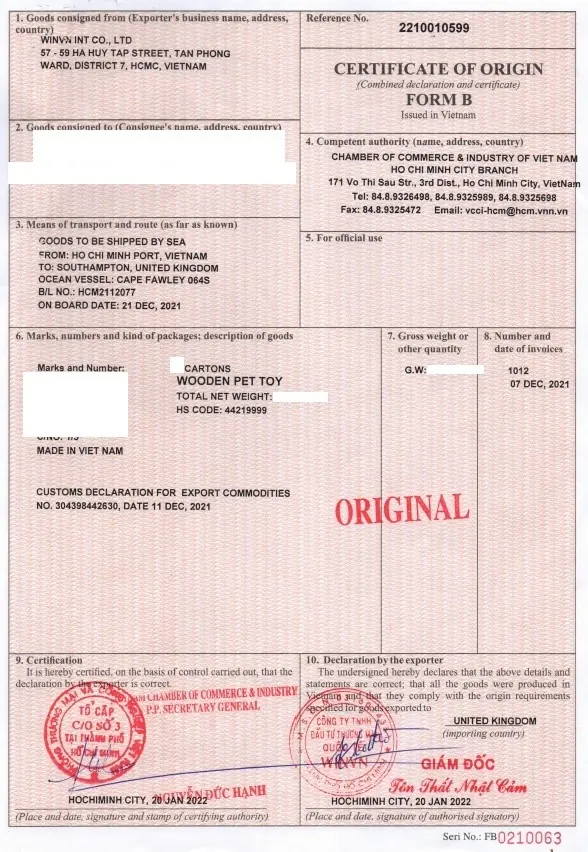
A certificate of origin from an actual shipment — buyer details redacted.
Why won't you just send a price based on my product photo?
A quote based only on a photo is usually inaccurate, because price depends on fiber grade, size, packaging and quantity — not just what the product looks like. It's less about withholding a number and more about giving one that actually holds once you place the order. Sharing your channel, use case and rough quantity gets you there faster than a photo alone.
How do I avoid the mold and bad-smell reviews I've seen on other loofah listings?
Most of those issues trace back to moisture that was still too high when the fiber was packaged. Asking your supplier for a moisture check record before shipment (target under 12%) is the most direct way to catch it before it reaches customers. We go through this in more detail, along with four other common causes, in why loofah products get 1–3 star reviews.
Should I start with stock packaging or go straight to private label?
Stock packaging — a plain kraft belly band or poly bag — is a lower-risk way to confirm a SKU sells before investing in private-label design and a bigger order. Either path can be made FBA-ready. The full walkthrough is in private label loofah: how to launch your own brand from 100 pcs.
Ready to see if loofah fits your next listing? Share your channel, product category and rough quantity, and get a recommended SKU path, packaging direction and sample process back within 24–48h.
Get wholesale price →