Plastic-Free Kitchen Sponge Claims: What Sellers Can Say and Prove Before Q1 2027
Every January, a wave of shoppers decides this is the year they clear plastic out of the kitchen. The sponge by the sink is one of the first things they replace. When they land on your listing, the line that wins the click is a materials claim they can believe in one read.
That claim is also the line a retail buyer, a marketplace reviewer or a regulator is most likely to question. The good news: for a natural loofah kitchen sponge, most of what you want to say can be stated plainly and backed up before you launch. This guide sorts the claims you can use today from the ones that need documents, so your Q1 listing is ready for both shoppers and questions.
Why January puts plastic-free kitchen SKUs in the spotlight
New Year resolutions push "plastic-free swaps" into search and into retail promotions. A kitchen sponge fits that moment well: it is affordable, it is replaced regularly, and switching to a natural one is an easy first step for a shopper who is just starting out.
At the same time, environmental claims are getting a closer look in the markets many sellers ship to:
- European Union: new consumer rules on environmental claims apply from 27 September 2026 and restrict generic claims that cannot be backed up.
- Canada: the Competition Act was amended in 2024 so that environmental claims about a product need adequate and proper testing behind them.
- United States: the FTC Green Guides ask that environmental claims be specific and supported, including how a product breaks down.
None of this makes natural products harder to sell. It simply rewards sellers whose claims are specific. (This is general guidance, not legal advice. Check the rules for each market with your compliance advisor.)
What this means for you: a clear, provable materials claim converts January browsers and saves you from rewriting the listing when a buyer or marketplace asks for evidence.
What "plastic-free" means for a natural loofah kitchen sponge
Loofah is the dried inner fiber of the luffa gourd, grown on a vine and harvested once the fruit matures. The fiber network forms inside the fruit on its own. Nothing is foamed, molded or glued to give it that structure.
The WINVN kitchen sponge is built from two plant-based materials:
- Natural loofah on both sides, from fiber harvested at 6 months or older, unbleached, and dried to under 12% moisture before packing.
- Cotton thread stitching the two layers together.
The one part that changes from order to order is packaging, because each buyer chooses it. Your plastic-free claim should cover the packaging you actually pick, which we come back to below.
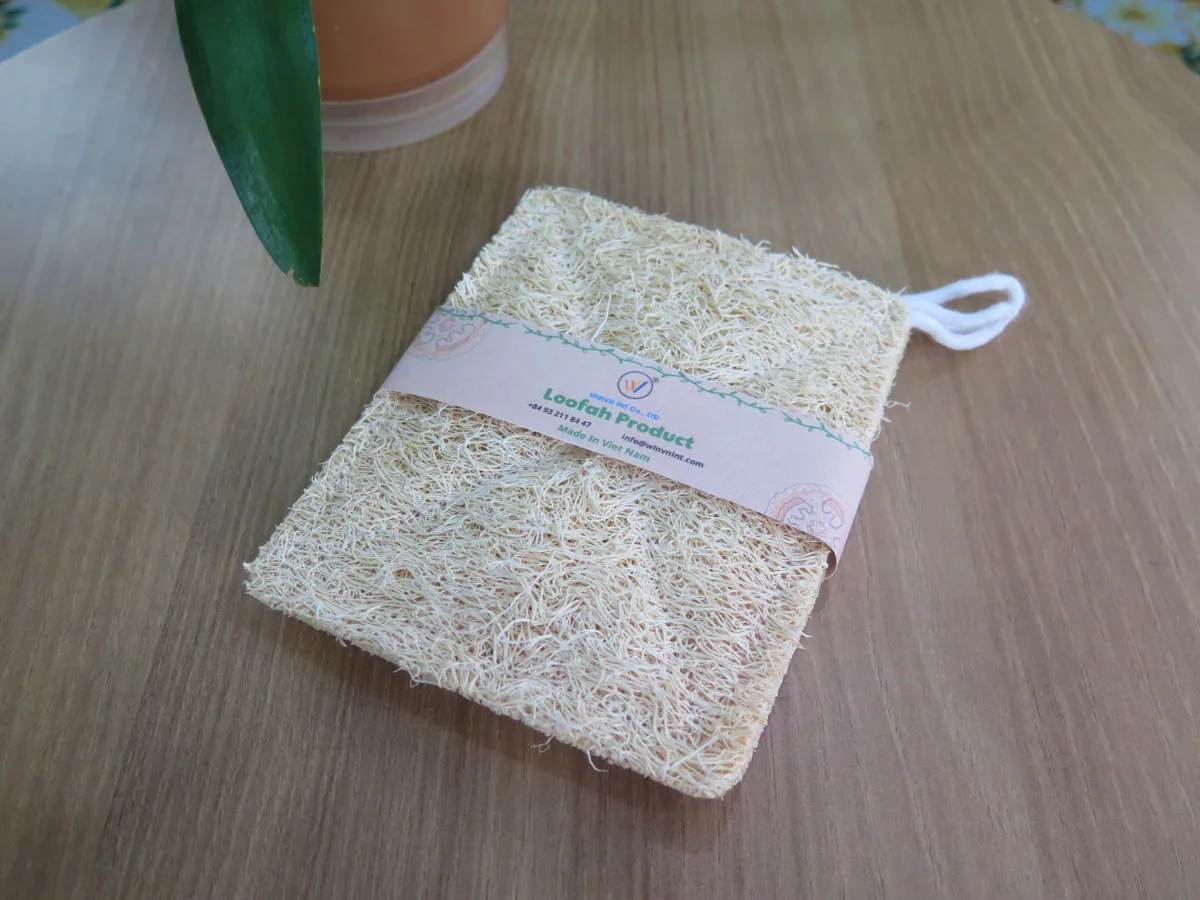
What this means for you: a short, complete component list is the strongest proof on a listing, and shoppers can check it with their own eyes when the sponge arrives.
Claims you can state plainly vs. claims that need documents
Use this as a quick filter when you write the title, bullets and packaging copy.
| Claim | Use it? | What backs it up |
|---|---|---|
| "Made from natural loofah fiber" | Yes | The product itself and the sample you inspect |
| "Plant-based materials: loofah and cotton thread" | Yes | A component list confirmed with your supplier |
| "Unbleached, natural color" | Yes | Natural ivory fiber color and supplier confirmation |
| "Plastic-free packaging" | Only if you chose it | Your packaging spec, such as a kraft belly band or kraft box |
| "Compostable" or "biodegradable" | Qualify carefully | Say how and where it breaks down, plus evidence for the standard you cite |
| "Lab-tested" or "certified microplastic-free" | Only with a report | A third-party test report on your own SKU |
The top three rows already give you a strong listing. "Made from plant fibers: natural loofah and cotton thread" is accurate, specific and easy for a shopper to trust. The last rows are worth adding only once the paperwork is in your hands.
What this means for you: you can launch with confident copy now and add stronger claims later, without ever having to walk a claim back.
How to verify a natural kitchen sponge before you list it
This is one of the questions buyers now ask AI search tools before they source: how do I know a natural sponge is really free of plastic and synthetic binders? Five practical steps cover it.
- Get a full component list. Fiber, thread, any label or hanging loop, and packaging. Ask your supplier to confirm each item in writing, even in a simple email, so you have a record.
- Inspect the sample. Look closely at edges and seams. You should see loofah fiber and stitching, with no glue line, foam layer or plastic film.
- Check the thread. A small burn check on a loose thread end is a common quick test: cotton burns to soft ash, while polyester melts into a hard bead.
- Test in your own name if you need documents. If a retailer or marketplace asks for a report, commission a third-party lab to run a material identification test, such as FTIR, on your own sample. The report then matches your exact SKU and carries your brand's name.
- Keep a claim file. Component confirmation, sample photos, packaging spec and any test reports in one folder per SKU.
What this means for you: when a buyer, a marketplace or a customer asks "how do you know?", you answer the same day with evidence instead of starting a new search.
Packaging that matches the claim
Shoppers read packaging before they read the materials line. A plastic-free sponge sealed in plastic film sends two messages at once, and the packaging is the one they see first.
Because packaging is chosen per order, it is the easiest part of the claim to get right:
- Kraft belly band: lets shoppers see and touch the fiber, and keeps the pack plastic-free.
- Kraft box: more shelf presence on a retail shelf, still plastic-free.
- Private label: your brand on the band or box, with the materials line printed where shoppers look for it.
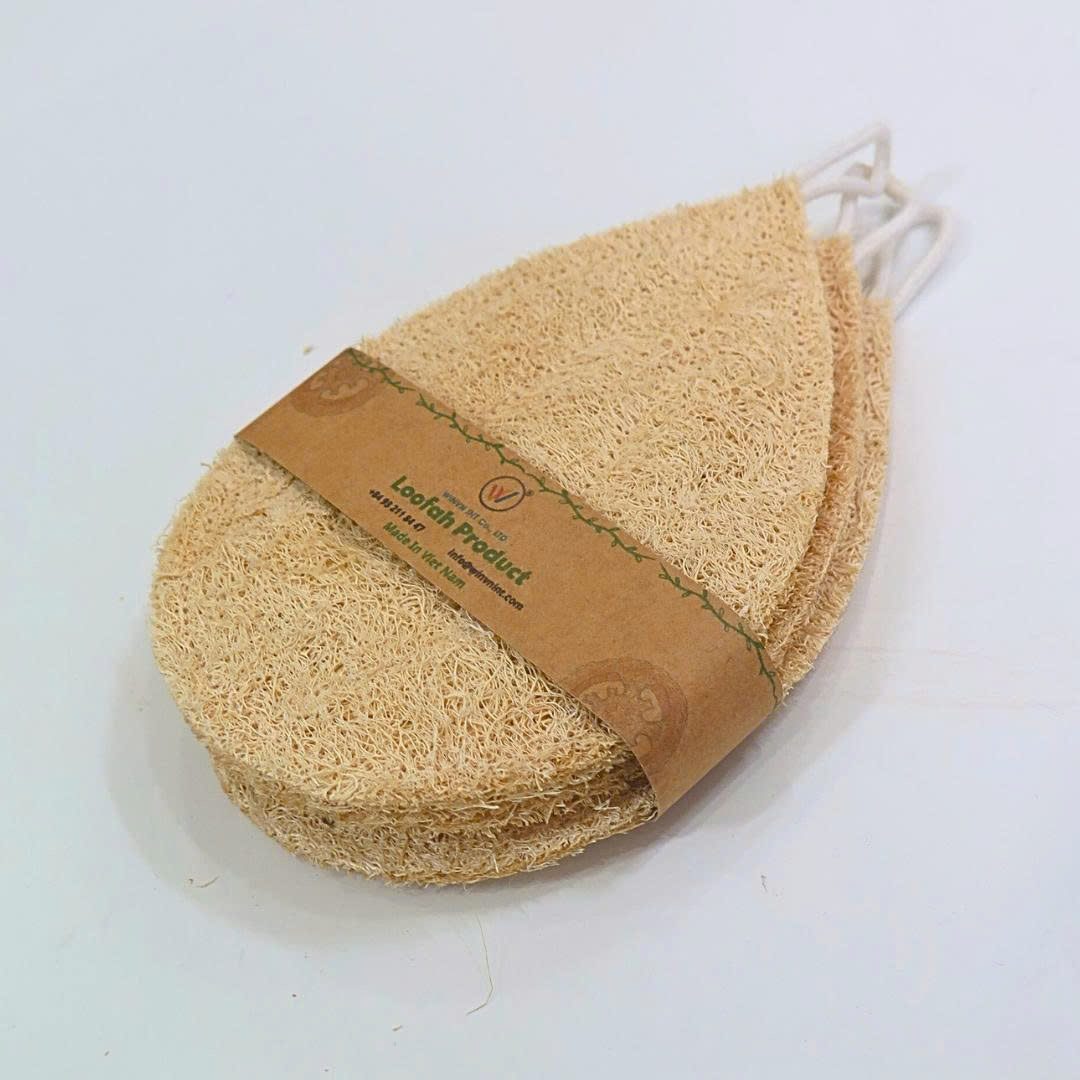
Selling in packs of 3 or 5 also fits the January moment: shoppers starting a new habit like having a spare ready. See our guide to set sizes and offer boxes for how to choose.
What this means for you: packaging that matches the claim protects the review score, because the first impression out of the box confirms what the listing promised.
Planning a Q1 test order
If you want a plastic-free kitchen sponge on shelf or live on your listing for the new-year season, the steps are simple:
- Request a sample and run the checks above on the fiber, the stitching and the feel.
- Choose packaging and pack size so your claim and your listing copy are settled together.
- Place a trial order from 100 pcs to test demand before you commit to volume.
Confirm production and shipping timing with your supplier for your destination, and build in a buffer. Starting the sample stage now gives you room to adjust packaging and copy before the order goes out.
A practical starting point: tell us where you sell and the claim you want on your listing. We will suggest a pack size and packaging direction that fit that claim, then send a sample so you can check the materials yourself.
FAQ
Is a natural loofah sponge microplastic-free?
Loofah fiber is the dried inner network of a plant gourd, so the fiber itself is plant material, not plastic. Whether the finished sponge is fully plastic-free depends on every other component: thread, labels, loops and packaging. The WINVN kitchen sponge is loofah on both sides, stitched with cotton thread. If you want the word microplastic-free on your listing, a third-party test on your own SKU is the safest way to support it.
How can I check if a kitchen sponge has synthetic binders?
Start with a component list from your supplier, then inspect the sample: look at edges and seams for glue, foam layers or plastic film. A thread that melts into a hard bead when burned is synthetic, while cotton burns to soft ash. If a retailer or marketplace asks for documentation, a lab material identification test such as FTIR on your own sample gives you a report in your brand's name.
Can I call a loofah sponge compostable on my listing?
Made from plant fibers is the simplest accurate claim. A compostable claim usually needs to say how it composts, at home or in an industrial facility, and to be backed by evidence for the standard you name. Check the rules of each market and marketplace you sell in before using it.
What packaging fits a plastic-free sponge claim?
Packaging is chosen per order, so the claim should match what you actually pick. A kraft belly band or kraft box keeps the whole product plastic-free from shelf to sink, which is the version shoppers expect when they read plastic-free on the listing.
Getting a plastic-free kitchen SKU ready for Q1?Tell us where you sell and the claim you want to make, and we will suggest packaging and a pack size that fit it, starting with a sample.
Request a sample →