Natural Loofah vs. Synthetic & Cellulose Sponges: What Amazon Buyers Actually Compare
If you already sell a synthetic foam or cellulose sponge and you're weighing whether to add a natural loofah SKU, the honest answer is that none of the three materials is universally "better." They serve different jobs, and the sellers who do well with loofah tend to be the ones who position it correctly next to what they already stock, rather than treating it as a straight swap.
Here's a practical, material-by-material comparison — and what it means for how you list and market each one.
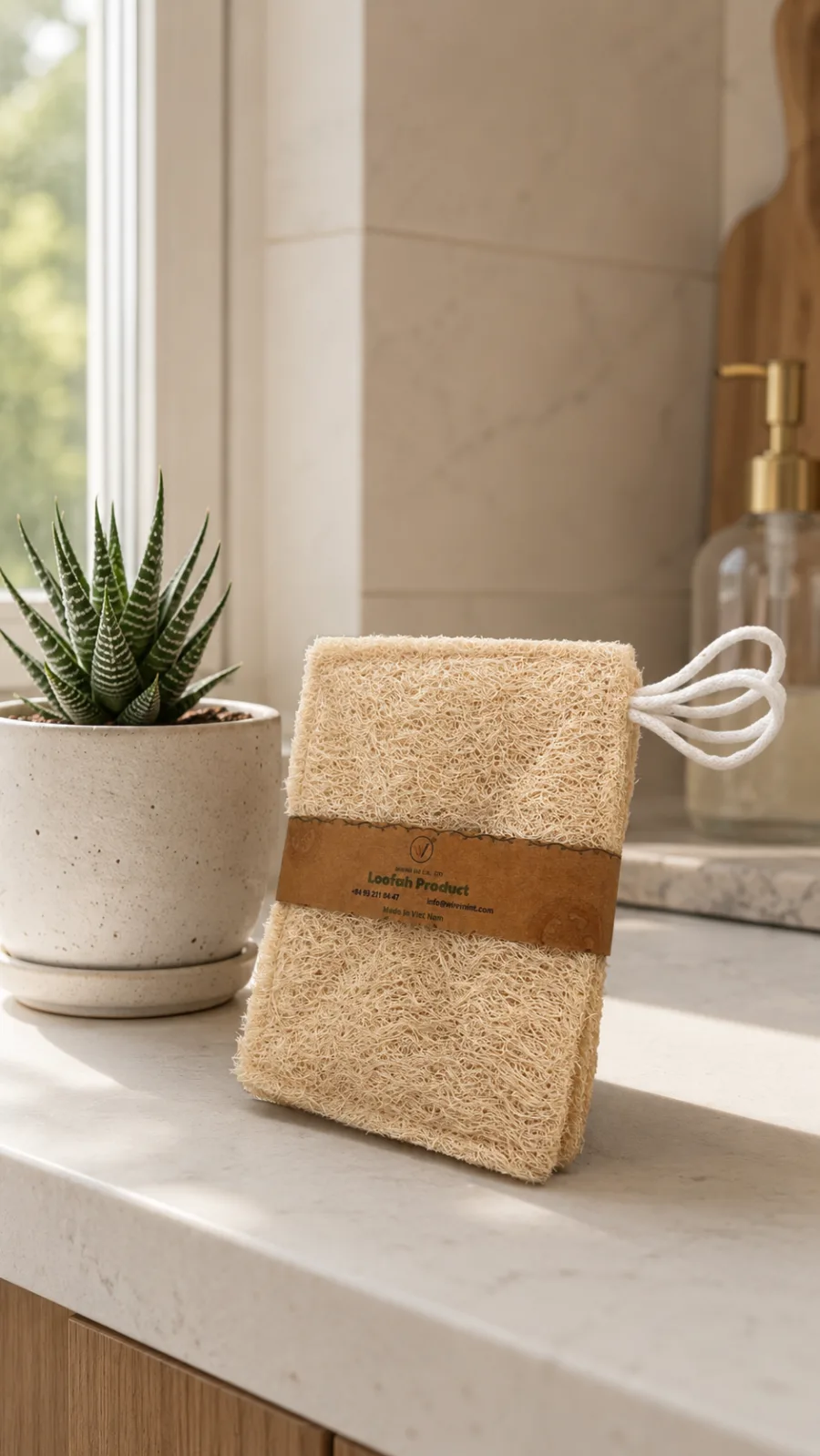
Natural loofah fiber — the texture is the first thing a buyer notices, and the first thing a review usually mentions.
Material and biodegradability
Natural loofah is a plant fiber — the dried, matured interior of the loofah gourd. Unbleached loofah is fully compostable on its own once it reaches end of life.
Synthetic sponges are typically polyurethane foam. They don't biodegrade, and foam fragments are a known contributor to microplastic shedding during use — a detail eco-conscious buyers increasingly look for in reviews and Q&A before buying.
Cellulose sponges sit in between: the base is wood pulp, which is biodegradable, but many cellulose sponges pair that with a synthetic scrub pad layer or an antimicrobial coating, which changes how fully the finished product breaks down. It's worth checking the specific product rather than assuming "cellulose" always means fully compostable.
| Material | Base | End-of-life |
|---|---|---|
| Natural loofah | Plant fiber (loofah gourd) | Compostable if unbleached |
| Cellulose sponge | Wood pulp (often + synthetic scrub layer) | Partially biodegradable, depends on construction |
| Synthetic sponge | Polyurethane foam | Does not biodegrade |
Texture and use case
Loofah fiber is naturally more abrasive than either alternative, which is exactly why it works well for heavier jobs — scrubbing pots and pans, or exfoliating use in the bath — but can feel too rough for a job that just needs a quick wipe-down. Cellulose sponges tend to be softer and more absorbent, suited to everyday surface cleaning. Synthetic foam sponges vary a lot by density, which is part of why reviews on generic foam sponges are so inconsistent.
This is the same principle we cover in why loofah products get 1–3 star reviews: a single "multi-purpose" SKU used across bath and kitchen listings is a common source of mismatched reviews. The fix is the same here — match the fiber grade to the specific job on the listing, not one generic option for everything.
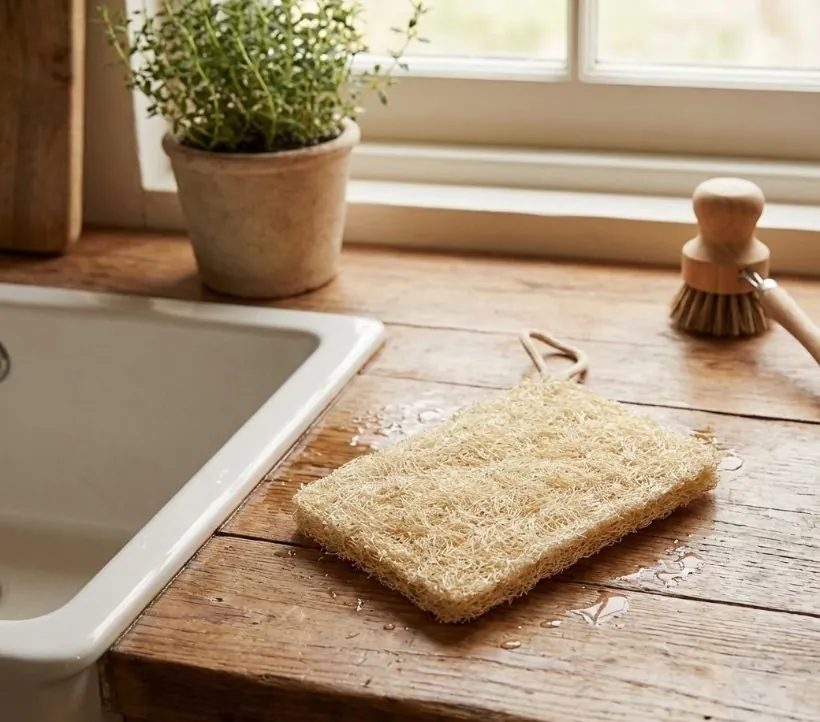
SKU shape and fiber density matched to the job — kitchen scrubbing vs. bath exfoliating need different builds.
Durability and replacement frequency
Foam sponges tend to hold moisture, develop odor, and get replaced often — which is part of what drives buyers to search for alternatives in the first place. Natural loofah, air-dried properly between uses, generally holds up over more uses than foam, and even once it's replaced, it isn't adding to landfill plastic the way a foam sponge does. Cellulose sponges typically fall between the two on lifespan.
None of this is a guarantee — a loofah sponge that isn't dried properly between uses will wear out fast regardless of material, the same way any sponge does.
What eco-conscious buyers are actually searching for
Buyers who search "plastic-free sponge," "compostable scrubber," or "natural loofah" are usually looking to move away from foam specifically, often because of microplastic concerns or past experience with sponges that fell apart or smelled fast. That's a real positioning angle for a listing — not a claim to overstate, but a genuine reason a segment of buyers is already looking for what loofah is.
Should you add loofah, or switch entirely?
For most sellers already running a sponge line, adding loofah as a complementary SKU is the lower-risk move — it lets you test demand for the plastic-free angle without disrupting a listing that already works. A trial order from 100 pcs, with FBA-ready packaging, is enough to find out whether it's worth expanding before committing further.
Considering a loofah SKU alongside what you already sell? More on how to launch it without a big upfront commitment: private label loofah — launch your brand from 100 pcs. Have sourcing questions first? See our Amazon sellers FAQ.
FAQ
Is natural loofah more effective than a synthetic sponge for scrubbing?
It depends on the job. Loofah fiber is naturally more abrasive, which makes it well suited to heavier scrubbing — pots, pans, exfoliating use — while a softer synthetic or cellulose sponge is often preferred for wiping down surfaces. Matching the SKU to the use case matters more than which material is objectively "better."
Does natural loofah biodegrade faster than a cellulose sponge?
Unbleached natural loofah is a plant fiber and fully compostable on its own. Cellulose sponges are also plant-derived and biodegradable, but many combine wood pulp with a synthetic scrub layer or coating, which affects how fully the whole sponge breaks down — worth checking per product rather than assuming.
Can I sell both a loofah and a synthetic sponge under the same brand?
Yes. Many sellers add a natural loofah SKU alongside an existing sponge line rather than replacing it outright, positioning loofah as the plastic-free option within the same brand.
Do I need a new supplier to add a loofah SKU alongside my current sponge line?
Not necessarily a full switch — a low-MOQ trial order from 100 pcs is enough to test a loofah SKU alongside what you already sell before deciding whether to expand it.
Thinking about testing a natural loofah SKU alongside what you already sell? Get your wholesale price — SKU path, packaging direction and sample process matched to your channel, within 24–48h.
Get wholesale price →